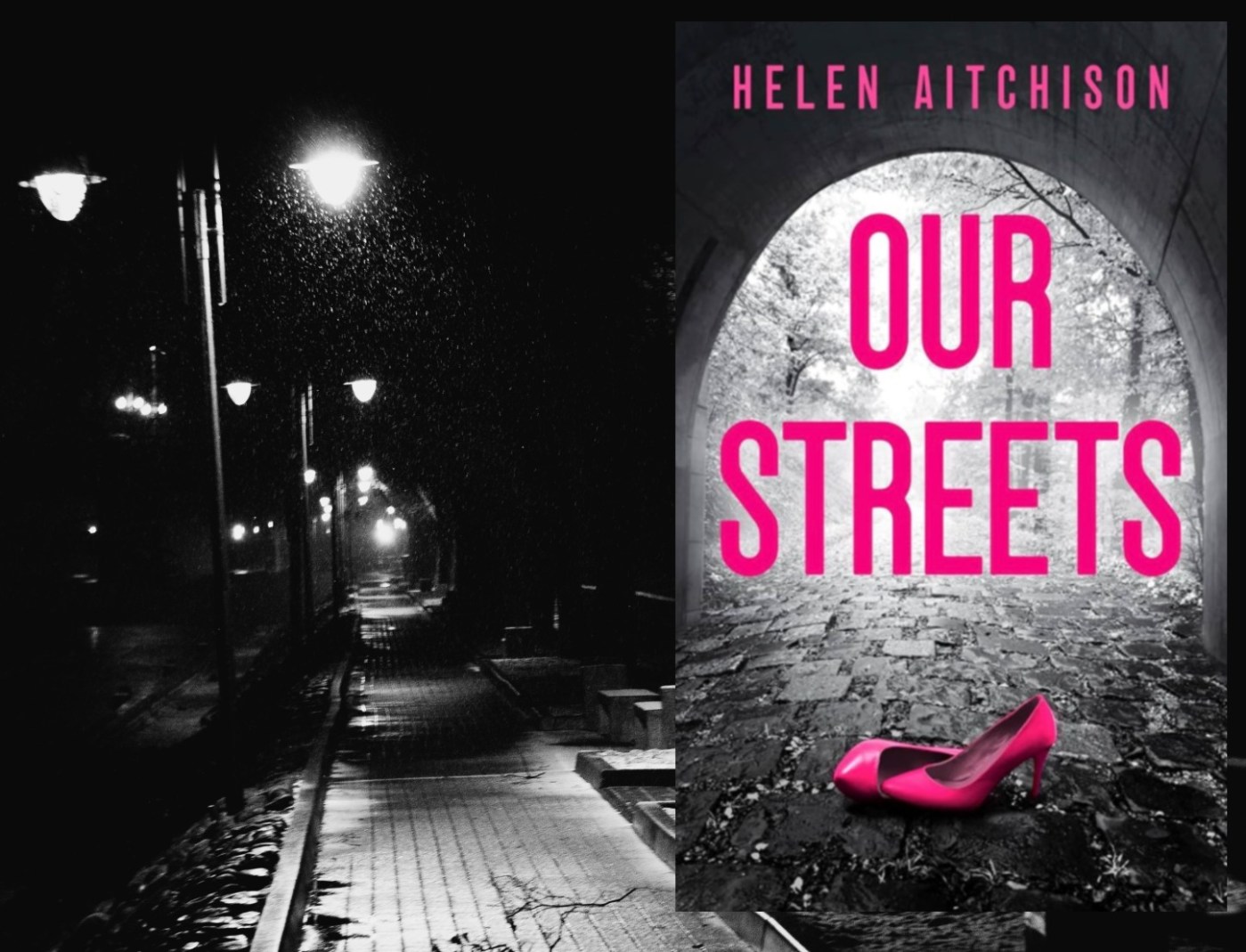
Helen Aitchison did it again: allowed us into the warped mind of a sociopath, making us shudder with the realisation that if one were sitting next to us at work, we wouldn’t have a clue.
“Our Streets” is the third instalment of the Ericson and McCardle series. It can easily be read as a standalone, but to me, it adds to my enjoyment of the story to learn more about the familiar character in each subsequent book. I admit that my personal favourite in this series isn’t the main character, Polly McCardle, but her former boss and now subordinate and colleague Ronnie Ericson. I am looking forward to seeing him again in the next instalments of the series.
Crosley in Northumberland isn’t a safe, prosperous place, unfamiliar with crime. Has not been so for a long time. As it often happens when something becomes a usual, everyday occurrence, people stop viewing it as something extraordinary. They simply move on with their lives as best they can. Still, when several murders happen within too short a period of time, even the tough Crosley inhabitants feel shocked, threatened, and anxious.
Polly McCardle and her murder investigation team at Northumbria Police realise early on that this isn’t going to be an easy case. But even with their vast experience and complete dedication to the job, officers cannot imagine who they are dealing with this time. And how incredibly hard these murders will hit them.
As she always does in her books, the author touches upon serious and controversial topics that people reluctantly discuss. But if left ignored, these issues tend to pile up and occasionally pop up at the forefront of those least expecting to ever encounter them.
“Our Streets” offers an insight into the world of sex work. Most people seldom give it a thought how these women end up selling their bodies. Some shrug it off as some perverse need to do dirty things to satisfy some inherent cravings. Others arrogantly suggest that if one wants to, they can always find a different way to earn money. Very rarely, people care enough to dig deeper into what led women – often still teenagers at the time – to step on the path where they are exploited and their chances for a better future are snatched away from them.
Helen Aitchison does a brilliant job of uncovering who most often ends up as sex workers and why the majority of these girls don’t stand a chance at resisting the cruelty of the system and the world.
Two things I appreciated most about reading this book. First, the ability of the author to make me see the logic behind the killer’s actions. His motivations, though inhumanely cruel and unquestionably perverse, were sound and solid in a way. The author made me, if not sympathise with him, but at least understand him. And that, in turn, made me feel slightly disgusted with myself. And second, as I mentioned earlier, the thorough and objective insight into sex workers’ circumstances.
“Our Streets”, offering an unapologetic view of the acute social issues, is a crime fiction page-turner that will surely satisfy fans of the genre.


Leave a Reply