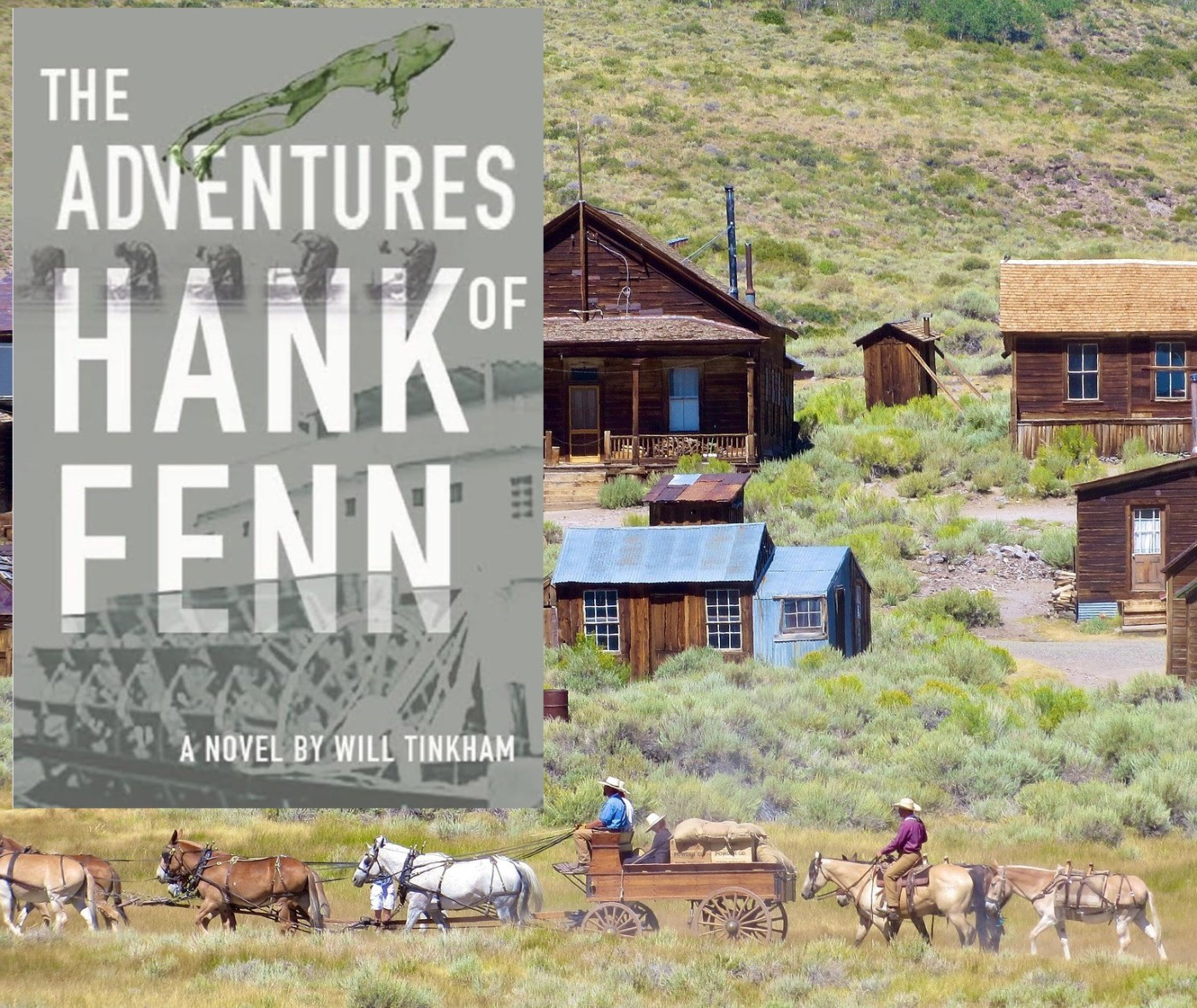
We meet Hank in 1860 when he is twelve. “Born in 1848,” he tells the pilot of the steamboat, who had just saved him from being crushed by paddle wheels. In that moment, little did Hank know what a life full of adventure was waiting for him. Just like he had no clue that the man who rescued him was to become one of the most famous writers in the world.
“The Adventures of Hank Fenn” begins with its protagonist meeting Mark Twain, at the time when the latter worked as a pilot of the steamboat City of Memphis. A true fact, by the way. Then known as Sam, the future author takes to the scrawny but well-spoken beyond his years stowaway, and their fates become interlinked. In the decades that follow, life persistently gets in the way of their plans to meet, but the friendship they formed on that steamboat remains unbreakable, if only slightly crooked by the fame of one and the struggles of the other.
This is an impossible task to retell the plots of any of Will Tinkham’s books. Any such attempt is doomed to fall short. The events would make no sense. The characters would seem like empty shells. Only by reading the Americana series can you embrace the rich tapestry of interwoven fates of a huge country and its people, through time and across the states, from ocean to ocean.
How can you describe the clamorous croaking frog of Cairo, Illinois, that helped steamboat pilots navigate the sometimes treacherous bends of the Mississippi River? And how can you make the other person feel what Hank felt when he was buying a mule and the animal happened to bear the same name as the Mississippi River’s navigator frog?
I liked Hank Fenn. He used the opportunities given to him by life and other people and kept moving forward if the opportunity turned out not to be as promised. He remained faithful to his principles, but did not sabotage the well-being of his loved ones and his own for the sake of rebellion alone.
With his diploma in geology obtained at the College of California, Hank never lacked job offers. His dream of writing he didn’t discard as well. Already in college, while studying mining and geology, he took as many English and writing classes as he could. And along with establishing himself as a valuable professional sought after by railroad construction companies, he wrote a few novels. I found the combination of Hank’s pragmatism and creativity extremely relatable.
My favourite quote from the book is: “He wondered if all books weren’t but blocks of wood till they somehow opened you up.”
And the words that made me stop and think are: “The news would go out over the wires and through newspaper stories, but soon would fade from memory for all those who did not live it firsthand.”
Only one book is left for me to read in the Americana series. Then, I’ll have to wait patiently for Mr Tinkham to present the world with his new masterpiece, the one which, I am confident, will open me up.


Leave a Reply