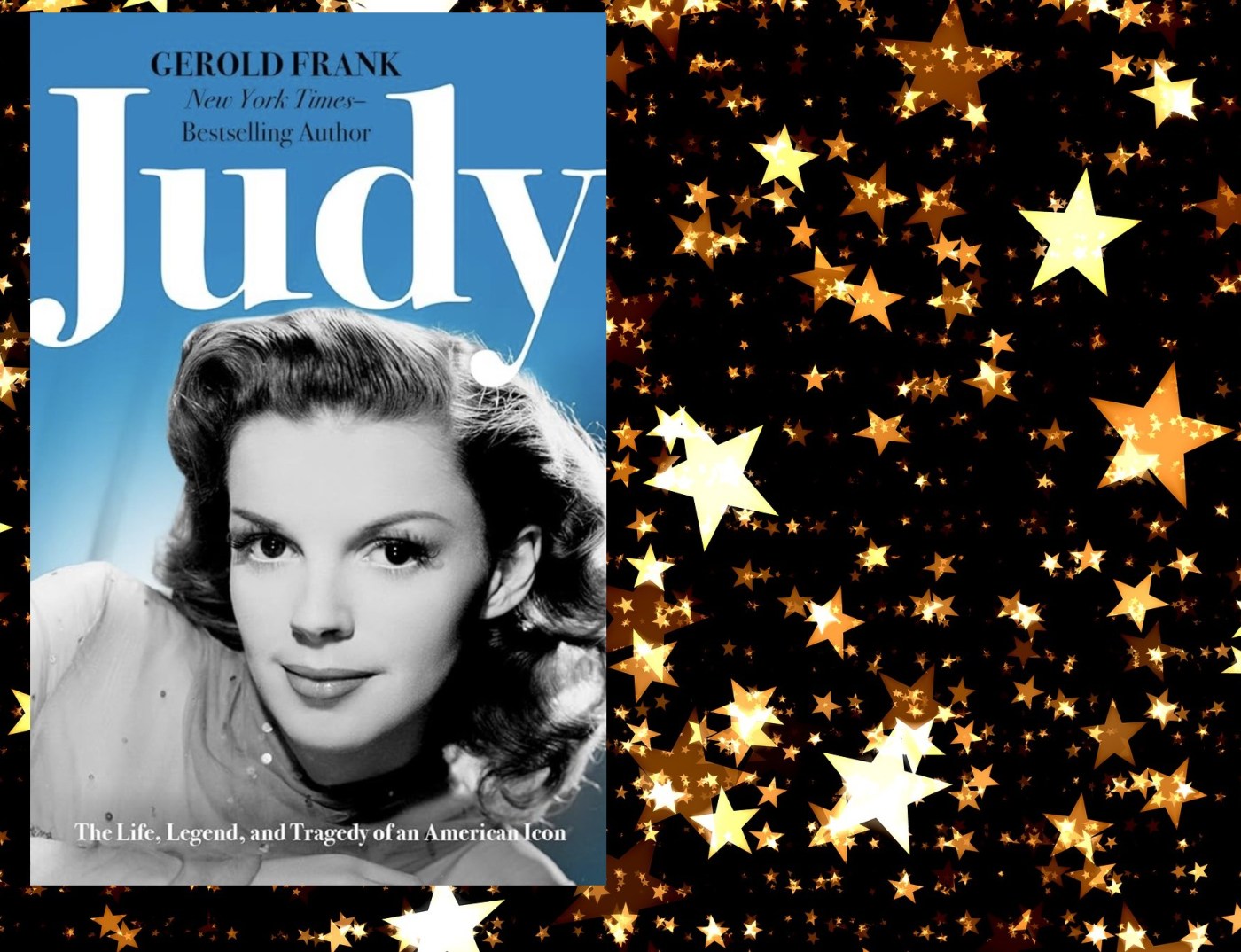
I don’t say it often, but reading this book was torture. I had to intersperse reading it with delving into other books. And that, I seldom do. That said, I cannot claim that I didn’t enjoy ‘Judy’ by Gerold Frank. Judy Garland, without a doubt, is a fascinating object for a biographer. The author, having had unprecedented access to her contemporaries and personal archives, did a magnificent job of presenting her in an objective light. Besides, the life of a star of Judy Garland’s calibre is bound to entice readers.
The book is very lengthy. While it isn’t always a drawback to me personally as a reader, in this case, that’s what ultimately spoilt the whole experience for me. Judy Garland’s life was tumultuous, with the storm clouds of her addiction to pills condensing towards the end of her life. There was a long stretch when almost exclusively bad and upsetting things happened to her. And considering the meticulousness, which the author chose for this work, it felt depressing to read about these bad things – over and over again, described in excruciating detail.
Another thing that bothered me while reading was that Judy Garland wasn’t a nice person. It doesn’t usually affect me much, both in fiction and non-fiction. This time, I couldn’t refrain from feeling outraged and sometimes disgusted at her. It isn’t unusual for a creative person who climbed the very top of stardom to be self-centred. Judy Garland took egoism to another level. Seriously, two of the latest among my biographical/memoir reads (one of my favourite genres) were autobiographies of Elton John and Matthew Perry. Both gentlemen totally absorbed in themselves. And still, they at least tried to do something to compensate those around them for the hell they put them through. And not with throwing money at them. Judy Garland never did the first and couldn’t do the second, for she was constantly broke and in debt. Which, I feel bad saying this, was her own fault.
Her relationship with finances was another source of frustration for me while reading. I’ll get to it next, after finishing my thought about her relationship with people. She was despicable to everyone. And I mean literally everyone. Her family, friends, colleagues, sponsors. It turned out that she even treated her fans with contempt, despite the incredible influence she always had over her audience. It was disgusting to learn that about her. The way she treated her mother made me dislike her the most.
The author mentions that Judy had a habit of inventing nasty stories to shock her listeners, and some of the nastiest ones were about how her mother treated her when she was a child. According to Judy Garland, her mother, seeking fame and money, exploited her talented daughter, while Judy herself wanted nothing more but to ‘be like other kids.’ Honestly, after reading this biography, I don’t think that she would have been happier if her mother hadn’t ‘jumped out of her skin,’ sacrificing her own comfort and probably even her happiness in marriage, to make Judy a star. Had she led a regular life, stayed in Grand Rapids, become a sales girl or a typist or gotten married right after school, I truly don’t believe that she’d have felt more fulfilled. Also, I don’t believe that she wouldn’t have developed an addiction of some sort. It might not be to pills, which were a fashion in Hollywood, but it could just as easily be alcohol, cigarettes, or junk food.
As I mentioned earlier, Judy Garland wasn’t good with financial issues. First, her mother, then her husbands and managers handled them, and she didn’t care to make an effort to learn at least the bare minimum about bills and how much everything cost. She never blamed herself for being in perpetual financial trouble. She always blamed others. And that, while being irresponsible when it came to fulfilling her contracts.
Judy Garland accused MGM of mistreating her. Yet, as her problems with the studio are described in the book, it seems that it was the actress who violated her obligations. The studio, on the contrary, did everything it could to keep her and gave her countless second chances. And how ardently did she crave that very first chance! One would have thought that she’d value it more once she got it. True, the life of an actress isn’t all glitter and honey. But then again, the life of an ‘ordinary person’ isn’t either. And I doubt that Judy Garland would have been happier if she’d had to lead the second.
The author muses, apparently trying, closer to the end of the book, to draw some conclusions: “…she was a child who had never grown beyond the age of five…” I am inclined to agree. Judy Garland seems to have remained Frances ‘Baby’ Gumm – her real name and a family nickname – even when the world and she herself perceived her solely as the greatest of stars, Judy Garland.
The behaviour described in this biography is not that of an adult person. It is of a spoilt child who knows that everyone will do her bidding if she throws a tantrum. People in Judy’s life did treat her like a child, afraid to upset her, all through her life. I didn’t get the impression that they all wanted to bask in her fame. Most of them, surprisingly, genuinely cared about her and loved her. I guess there was something in her that the author of this book could not know about, could not feel about the object of his research. There must have been something about the person, who, endowed with a unique talent – that goes without saying – was selfish, emotionally unstable, and infantile in the extreme measure.
Despite the long rant about how unsettled this life story made me feel, I still enjoyed many parts of it. My favourite one is about the making of the legendary ‘The Wizard of Oz.’ When movies or books or other art objects like this are made, there is something magical about it. So many details must come together in a whole puzzle, and then the legend is born and lives for decades and even centuries. Truly fascinating.


Leave a Reply