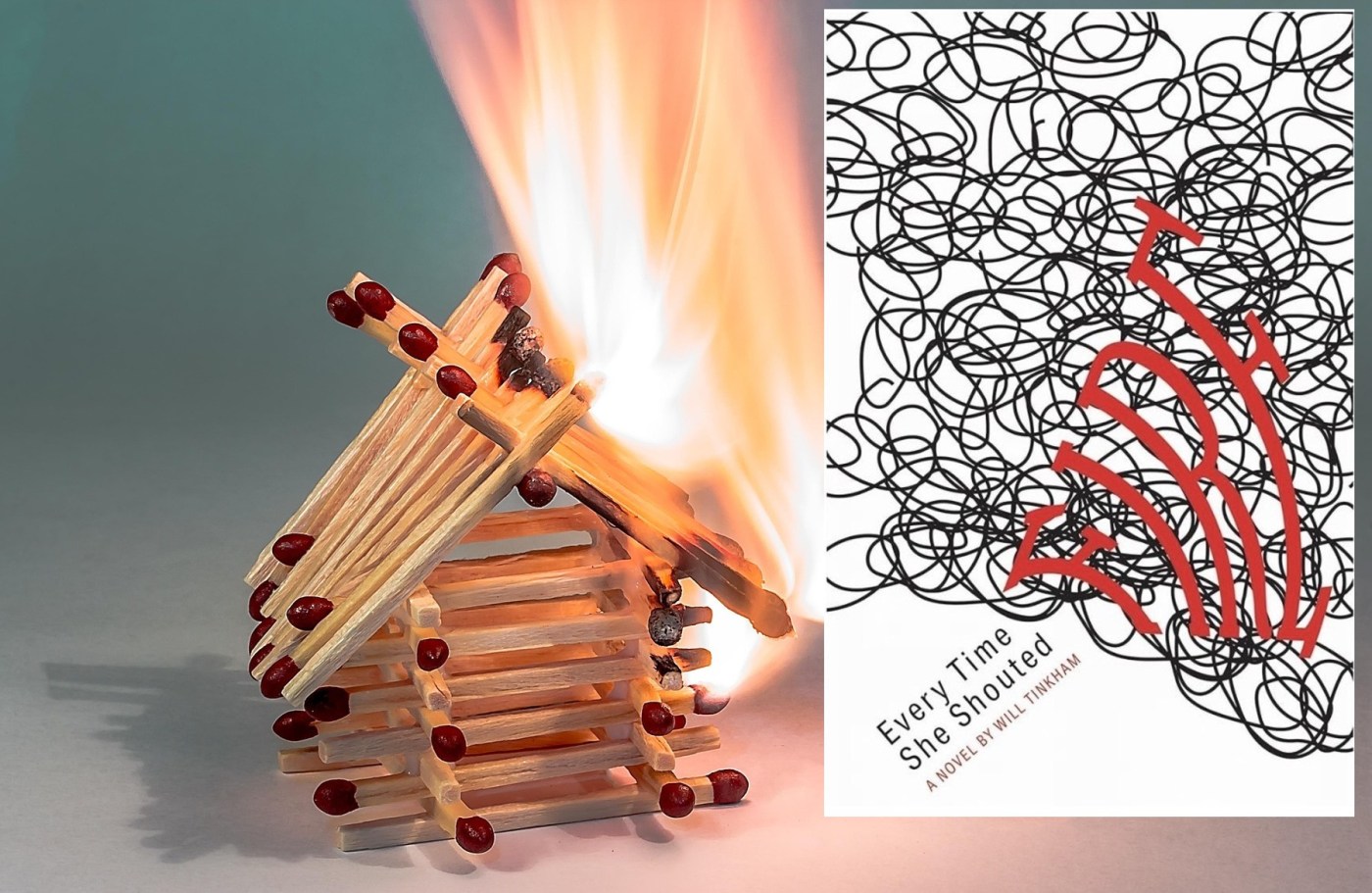
I cannot get enough of Will Tinkham’s Americana series. Having read eight books, I plan to read the remaining five over the course of the upcoming summer. And then, I’ll be waiting – impatiently! – for him to release new ones.
The Americana series is a sweeping saga at its best. It pulls you into the world the author created, and after reading a few novels, you feel like you know or have known all these people. Yes, characters become real people, and I’ve grown to care for them deeply. Every mention of a character from previous books makes my heart constrict with a tinge of sweet nostalgia.
In “Every Time She Shouted Fire”, we meet Matty. She is eight, and she quite literally inflicts trouble on herself by shouting ‘Fire.’ As she grows into an intelligent and ambitious teenager, fires keep following her as if she is supposed to do something about it someday.
While Matty is a riveting protagonist, with a lot of commendable qualities, my reader’s heart belongs to the Miracles. I was happy to ‘meet’ them in this book, having fallen irreversibly in love with the odd assortment of individuals who, in their Americana instalment “The Miracles,” have formed themselves into a family in the truest meaning of this word. Nicholas is a total darling. In his fifties – even though doctors predicted him not to live beyond teenage years – he is someone who knows everyone in town and whom everyone knows, and almost everyone loves. His relationship with his hard-working wife Ei Ei is a treat! Even though St. Paul of the 50s isn’t what it was back in the days of Prohibition and the Great Depression, when gangsters ruled over town, Nicholas finds ways to help the police and protect the unsuspecting folks of St. Paul from criminal peril. As if to reward him for being an excellent human being, life throws a gift at him. Finally, his condition – Down syndrome – receives an official, non-derogatory name.
In “Every Time She Shouted Fire”, Brinda Miracle is in her seventies. I am not afraid to embarrass myself by admitting that it scares me to bits. I hope to see her crossing the threshold of a full century, or at least, that the author will let her enter her nineties – and in the same active and never-give-up fashion that she demonstrated all her life.
When I try to summarise what the Americana books are about, I feel stuck. It is pointless to retell the intricate plots and try to explain how perfectly the fictional and real characters blend together into an explosive narrative that makes you turn the pages well into the night. So, I won’t attempt to do it. In a nutshell, “Every Time She Shouted Fire” is about fires and family. It is about what miracles encouraging someone to pursue their dreams can bring about. It is about the contrast between growing up among those who don’t understand you and those who accept you for who you are. It is about life – the way it is and also the way it could be if we all were kinder to each other and more open to what the world is to offer, if only we are ready to embrace its gifts.
I am at a loss as to which book of the Americana series I’m going to read next. After reading the previous one, I thought it was going to be “The Cary Grant Sanatorium and Playhouse,” but now, after ‘meeting’ Caroline from “Bonus Man,” my curiosity about her fate has been ignited, and I might opt for “Falling Down Umbrella Man” instead. Anyway, it doesn’t matter, for in the end, I’ll read them all.


I am looking forward to spending some time reading in Will’s series, having followed for a while. Should I start at the very beginning, or is there another you recommend for first read?
LikeLike
I am looking forward to spending some time reading in Will’s series, having followed for a while. Should I start at the very beginning, or is there another you recommend for first read?
LikeLiked by 1 person
I am not sure which one Will himself considers as the first one. As I noticed, he changed the order of the books since the time I’d started reading the series. To be honest, having read eight books already, I don’t think it matters where you start. It is only a suggestion, but you might want to start with ‘The Teddy and Bara Show’ to get the first taste of Will’s exquisite style of writing and weaving the story together. My personal favourites so far are ‘The Miracles’ and ‘If I Lie in a Combat Zone.’ But I enjoyed them all.
LikeLiked by 1 person
Thanks, Eve.
That gives me good directions.
LikeLiked by 1 person
You are welcome. Recently I told my husband that I want to achieve some success with my books if only to be able to promote Will’s work. Honestly, it is so good that he deserves the widest possible recognition.
LikeLiked by 1 person