It is a special kind of pleasure when, while reading, I become torn between sense and emotions. When logic and experience tell me one thing about what’s best for the main characters, while the heart yearns for them to make an irrational but beautiful choice.
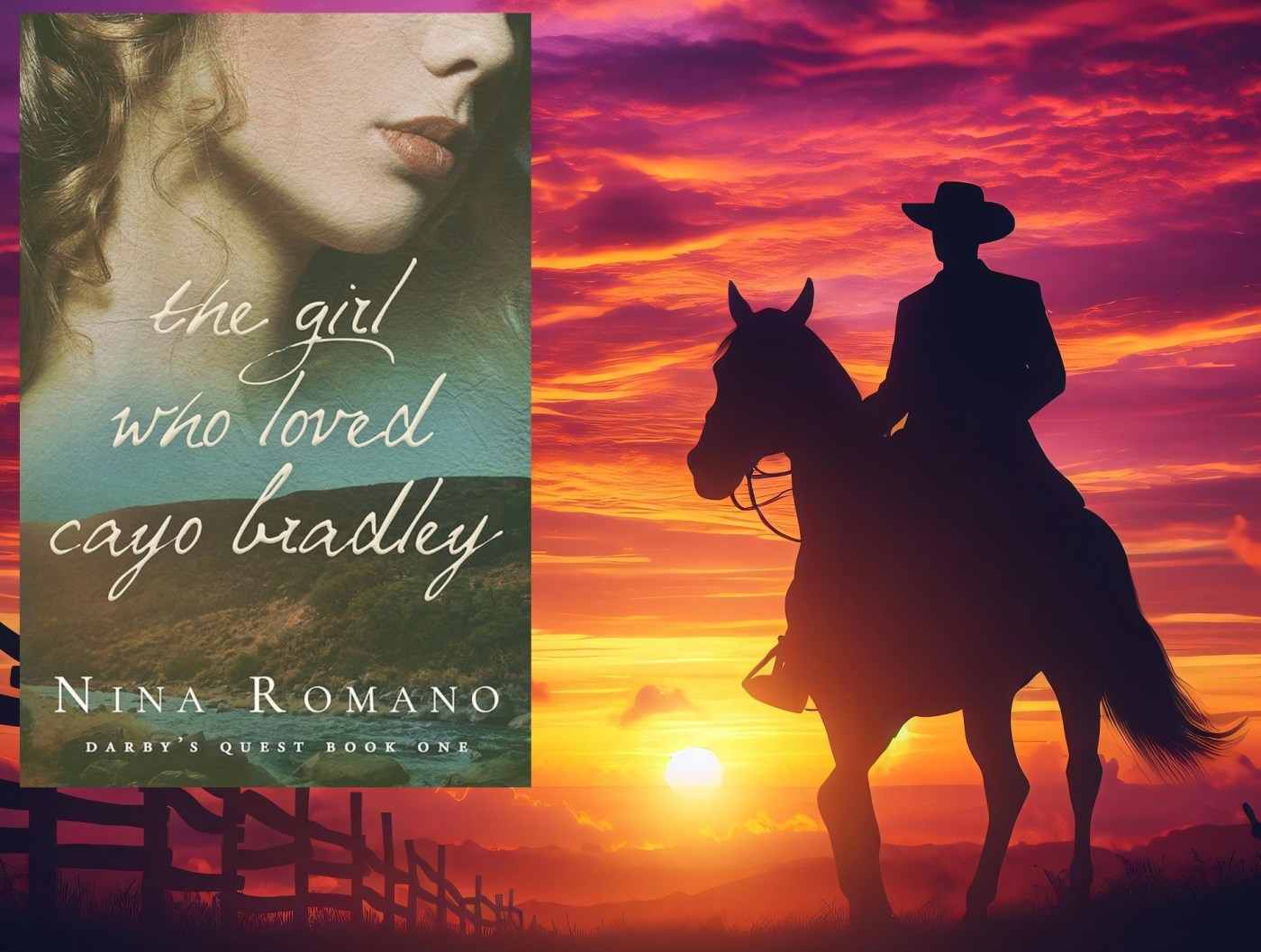
That’s exactly how I felt reading “The Girl Who Loved Cayo Bradley” by Nina Romano.
Yes, young love is marvellous in its freedom from prejudice and wider perspective. The feelings are acute, their value absolute. We become reckless and make mistakes. But all of it is so undeniably captivating that even as we age, we cannot cease to see it this way. No one would remember Juliet if she had married Count Paris instead of dying tragically for her love for Romeo. If she were a real person rather than a fictional character, that would have been best for her if she had, but if Shakespeare had opted for such an ending to his story, it wouldn’t have been the masterpiece that it is.
Many times, while feeling acutely the conflict and the passion that tore Darby apart, I thought to myself: “This isn’t that simple, girl. Don’t fall into this trap. The man is gorgeous, and when he looks at you with his smouldering stare, you melt, and no one else will ever make you feel this way. But think about what will be in twenty years. His alluring roughness will turn into ugly bitterness. His face and body, which now send delicious shivers down your spine every time you look at him, will age. The hard work will bend his back and crook his limbs. The fairy tale will become the reality. Choose your reality now, an easier, more pleasant one. And leave the magic of love and unbridled passion to dreams.”
But then immediately I scolded myself for being so unattractively dry and pragmatic. Why would anyone want to read about a young girl giving up on love, and why would anyone want to read it?
I appreciated the way the author has depicted the characters and their circumstances. This is the reason for my conflicting thoughts and emotions while reading. And that’s what makes a book a worthwhile read. Neither Darby nor Cayo are perfect. Also, the life on the frontier in the US in the second half of the 19th century is shown without smoothing out the edges. The author doesn’t shy away from depicting the harsh reality of that time period. We get a glimpse of the ways of the Jicarilla Apache through Cayo’s eyes. I found it fascinating to follow his transformation, both inner and outer, that he had undergone while in captivity. I often reflect on what impacts us more strongly, our origins or the environment, and this book gave me fresh food for thought on this subject.
“The Girl Who Loved Cayo Bradley” by Nina Romano is more than a love story. It is about Darby, a girl who dreams about getting an education and with it, a chance for a different life than the one she leads on her father’s farm, with days filled with hard work. It is about Cayo, whose life in the cocoon of the family has been snatched away from him, and instead, he’s been dealt the one of an Apache warrior. But above it all, it is about how one’s life gets shaped by the circumstances, while the scope of our personal traits is what determines the outcome. Life bends and twists us; yet, it depends on each of us individually if it breaks us.
I am looking forward to reading the next book in the series.


Leave a Reply