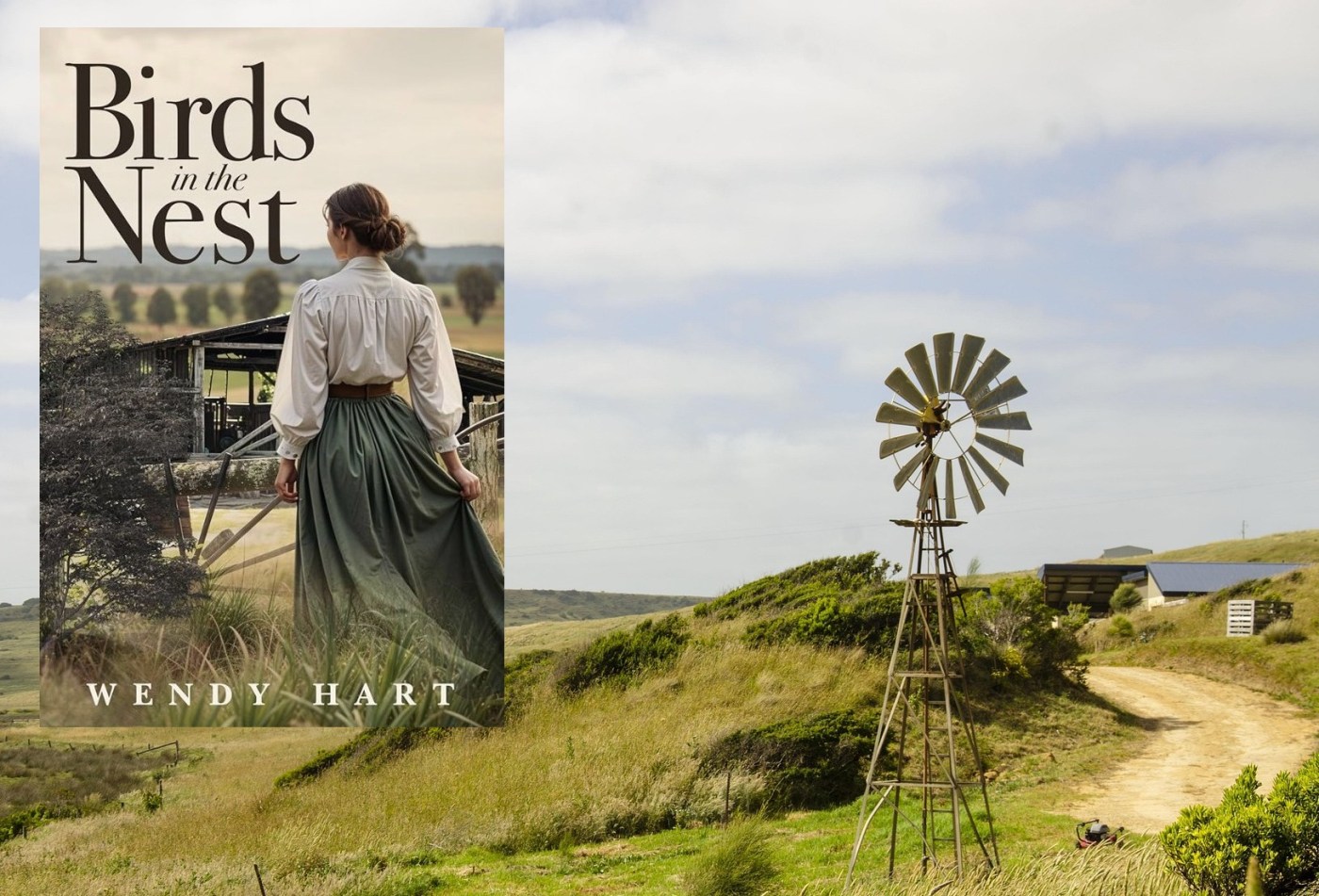
This book comprises what I appreciate the most in my reading: the rich setting and intricacies of human fates. Going about their day with the characters, doing their chores, feeling what they feel, be it joy, confusion, sadness, or grief, transforms me from a reader to a participant. And that, in turn, transforms a book into something more than words and plotlines. The story becomes a multi-layered emotional experience.
“Birds in the Nest” by Wendy Hart is as much about Minnie and her bumpy road to happiness, which nevertheless turned out rough around the edges, as it is about countless immigrants who undertook a perilous journey across the oceans, hoping to find a better life away from home. Based on the author’s grandmother’s life story, the book struck me as genuine and uncompromising. Neither Minnie’s homeland of Northern Ireland nor her new home, first Brisbane and then a rural area outside of it in Australia, is idealised.
Minnie comes from a family of farmers, and the life of those who tend the land and cattle could not be easy. Exhausting labour is an integral part of that life. Still, some people draw deep satisfaction from it, and Minnie is one of such people. So, after spending months in a stifling atmosphere of a sewing factory in Brisbane, it is understandable that her most ardent wish is to find herself among the fields and the cows again. Backbreaking the farmer’s work might be, yet one gets to see the fruits of their efforts, which are larger than banknotes and coins. Besides, while living in town, Minnie misses the solace brought by the magnificence of nature. She instinctively knows that watching dawns and sunsets every day restores one’s strength better than any comforts that city life can offer.
“Birds in the Nest” is heartbreaking but at the same time uplifting. Yet, the hope it gives is subtle. It’s not the catchy slogan like, ‘Work hard, and your life will be beautiful and carefree.’ Far from it. It’s more along the lines, ‘Don’t give up, and you’ll see that life is not all hardships and grief.’ I found it a sharp and honest perspective, one that reflects the reality in the best way.
Through Minnie’s eyes, and from the example of her family, we get to see how crippling prejudice really is. It brings more harm than disease and death, deepening grief immeasurably and adding to it. Minnie suffers many losses, starting from losing her mother at the age of two. She sees the ugliest sides of human nature when her family is being blamed for these losses instead of being offered support and help. Along with the bad, she also sees the good. Her father’s love, the camaraderie between her siblings, and the joy that working on land brings. As a result, when Minnie, at the age of thirteen, must leave her home and everything and everyone she knows behind, she is well-equipped for the journey. Both the physical one, on board the immigrant ship bound to take her from Northern Ireland to Australia, and the metaphorical one – from the old to the new.
I thoroughly enjoyed this book. The author has done an excellent job at portraying the times already gone, but that have shaped previous generations. The generations of people who brought us up, sharing their wisdom and resilience, which, I am certain, helps us deal with modern life’s challenges. True, these challenges are vastly different from those that Minnie’s contemporaries had to face. Regardless, the gumption remains the same irrespective of the nature of the hardships one must overcome.


Leave a Reply