I have come across a fellow author mentioning social media fatigue on one of the social media platforms, and it made me think. What kind of beast is it? Do I suffer from it?
The circle of people with whom I communicate regularly isn’t wide. It shrank even more during the years of the pandemic, and, because at that time I became immersed in writing, it hasn’t expanded back to its pre-covid times ever since. So, I don’t lay any claims to objectivity. These are only my personal impressions, based on the limited communication that I have in my everyday life.
When I mention something about social media algorithms changing again, real-life people usually laugh it off merrily, dropping casually that they do not care about such things. And that, considering that most of them scroll their feeds for entertainment or information. Whereas I never, and this is not an exaggeration, simply scroll feeds anywhere. I don’t have time for this. When I open a social media app or website on my computer, I do that with a concrete purpose. First, to promote my books. Second, to find out my author friends’ news. The rest of my time is religiously divided between caring for my family and my writing (editing, promoting, etc.).
As an author who publishes her books independently, I am bound to maintain a social media presence. I cannot one day exclaim: “I quit,” and depart into the blissful physical reality, away from the sins and sorrows of the cruel online world. Does it make me a social media victim? In a way, it probably does. But not more than the necessity to pay the bills makes most of us paycheck victims.
Anyway, victim or not, social media fatigue is a real thing. I can imagine how disappointed and exhausted people might feel if they don’t see results after having spent hours every day trying to please algorithms, posting, commenting, and doing everything that the platform supposedly rewards. It can make anyone wish to forget about social media torture altogether.
After contemplating my own feelings in this regard, I came to the conclusion that they are different. I cannot say that I have social media fatigue in the sense I described above. I don’t feel disappointed or exhausted because I don’t expect anything from my social media activity. Nothing extraordinary, that is. I know that it doesn’t matter how active or inactive I am, what content I post and how frequently, and even how persistently I interact with other people’s content. Algorithms won’t let me ‘cross the limits.’ They are set to facilitate the profitability of the business. Which means, basically, that those who pay get rewarded with wider reach, and, as a result, more likes, comments, and other forms of feedback. And it isn’t enough to pay for a blue checkmark. That alone won’t make the platform love you more. You have to pay for advertising and do this consistently.
Knowing this spares me from worrying about being ‘not good enough’ or not trying hard enough. I witnessed firsthand how the algorithm’s change altered the whole scene on one of the platforms virtually overnight. My personal account with 20K followers, where my posts used to receive over 3K likes and hundreds of comments, dropped into the abyss of barely getting 100-200 likes. It happened not because I did something wrong or changed something in the way I posted. It happened because business owners changed their strategy. This is life. That’s how the world works. In my opinion, and from my experience, not only with social media but with more serious issues, it doesn’t do you any good to lament it. It is much healthier to accept it, adapt, and move on.
And still, there is something that frustrates me about social media. I cannot call it fatigue, for it doesn’t make me want to take a break from posting or leave. I already don’t push myself in terms of posting every day or with some predefined regularity. If I don’t have enough time to write a new post, and do it as I like, carefully, thinking through what I want to share, and choosing a photo to go with it, I don’t do it.
What I find annoying is that the algorithm harshly limits the number of users to whom a post gets shown. I noticed that the number of views doesn’t depend on how well the post does in the first hour – that is what social media FAQ sections proclaim influences the performance. It also doesn’t matter when you post and if similar content received more feedback before. In short, none of the things that social media platforms themselves claim to be their performance principles actually work.
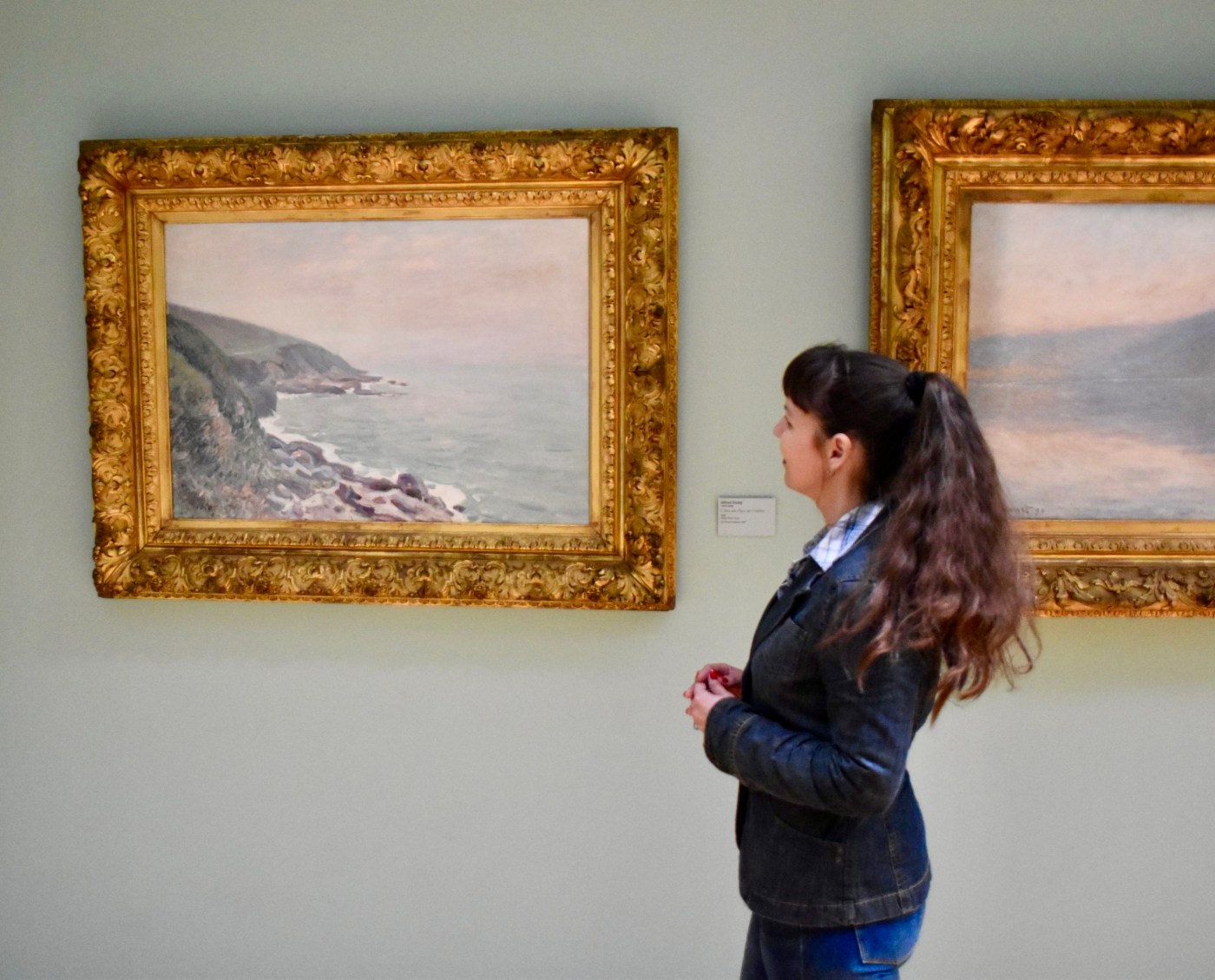
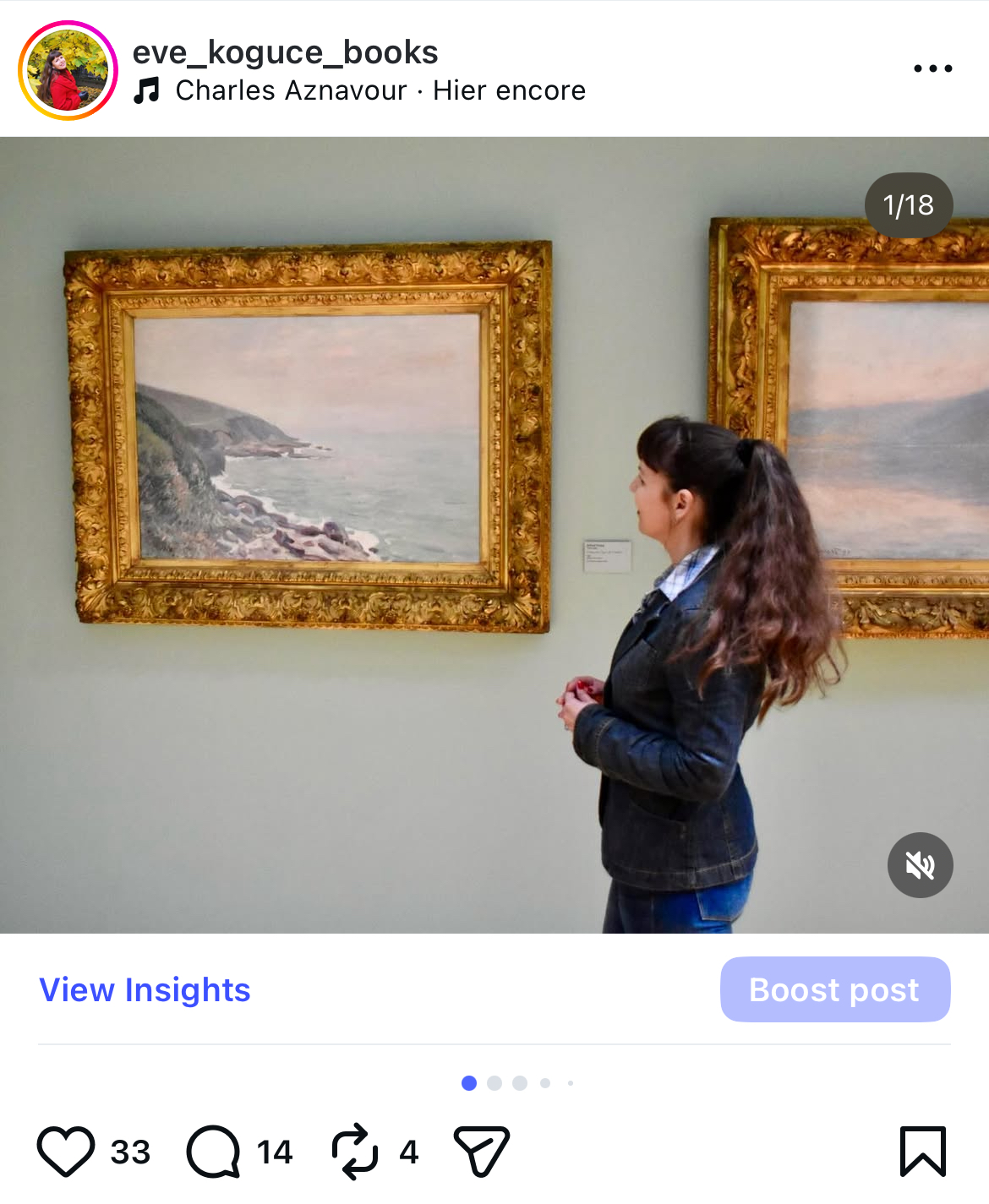
For example, my most recent Instagram post about visiting the Museum of Fine Arts in Rouen, France, got 33 likes. I don’t complain about that. The thing that makes me wonder is that the algorithm showed this post to 183 of 2.3K followers. In other words, to 7 percent of them.
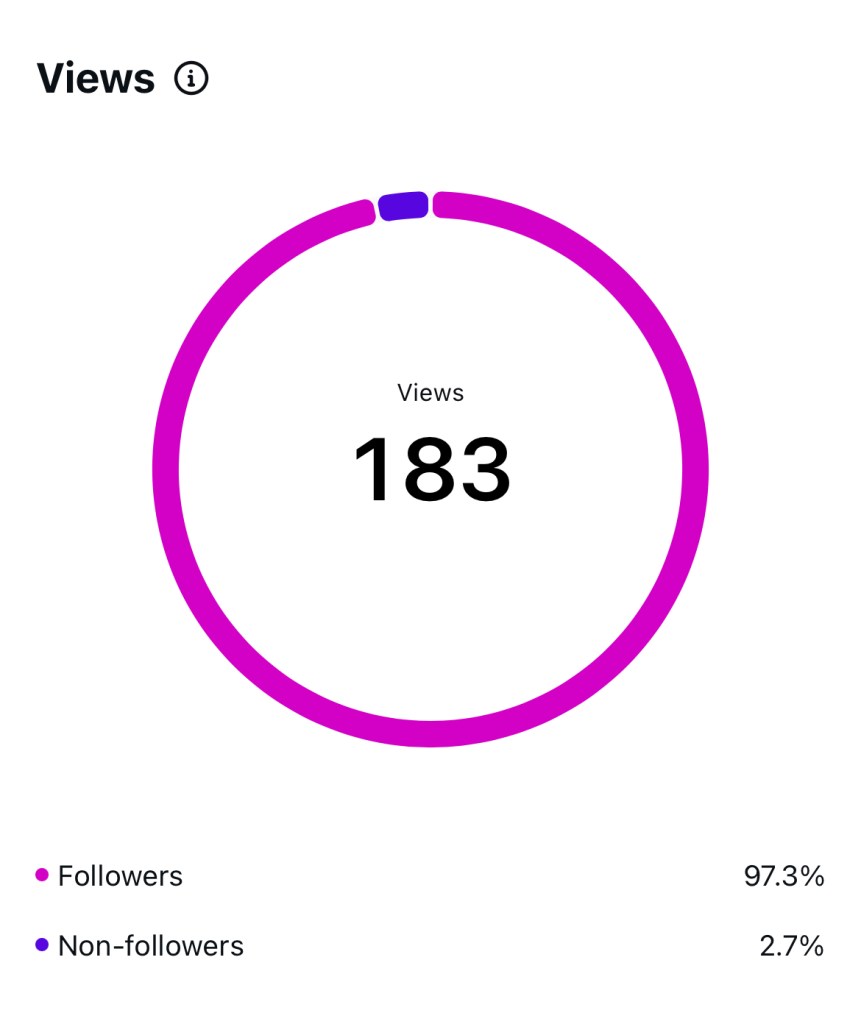
Would it make a huge difference for the almighty corporation that owns this platform if all 2.3K people who chose to follow my account saw my post? I sincerely don’t think so. I still wouldn’t sell thousands of books. I still would dream about being able to afford to pay for advertising and the opportunity to showcase my books to more people. But seeing 414 likes (that’s how many I could hope to get if the algorithm showed my posts to all my followers, 18 percent of them liked it, and, as a baseline, we take the 183/33 ratio of the example I mentioned above) would at least cheer me up. That, in its turn, would motivate me to be more active on the platform and think more seriously about searching for funds to allocate to paid advertising there. Besides, I’d be in a better mood.
One might think that social media platforms would only benefit from all these things. If users are happy and motivated to keep visiting the app/website, everyone wins, also business. Alas, algorithms do not think like that. Algorithms don’t think at all. They follow what’s been put into them. And those who set up those parameters do not seem to be interested in human factors.
When I started writing this blog post, I thought that I knew who, or to be precise, ‘what’ is to blame for social media having turned into a less-than-satisfying experience. I am surprised that after putting my thoughts ‘on paper,’ I have come to a different conclusion. It isn’t the algorithms that limit the number of posts’ showings. It is people who ‘tell’ them to do that.
Be that as it may, the overarching conclusion remains unchanged. Irrespective of who sets the rules, an AI-bot, a group of employees, or business owners, we can’t control how well our posts perform on social media. That’s why it is detrimental for our mental health to think too much about it. Instead of trying to push against the currents of technology-based processes, we should better concentrate on what no algorithm can do. On creating something new, be it stories or drawings, books or paintings, sculptures or figurines, the list is endless. Yes, AI will be able to replicate anything that we have ever created, and most probably its products will be more perfect. But only form-wise. A flawless face on a portrait will never evoke the burning curiosity in the hearts of those looking at it. A fast-paced plot, with twists in all the right places, will never keep generations of readers trying to guess ‘what did the writer think when he/she chose to…?” Only a human mind can infuse what it creates with mystery, often made even more compelling by the fact that even the creator himself doesn’t know how to solve it.
Perfection, although attractive, is always boring.
Never is it so with anything borne from the depths of the imagination of a creative mind.
 Eve's Book Diary
Very insightful essay. I also have come to terms with the changes in social media. I have chose to think of it as “paying for advertising” just like every other form of media. It helps to slow my anxiety about publishing my work, but I still need to have the money to pay for it, as you discussed.
LikeLiked by 1 person
Thank you for reading and sharing your thoughts. I’ve seen people burn out because of expecting too much from social media. I understand that someone might think that if they put in effort and time, they’ll get some extraordinary results. Alas, it doesn’t work this way with social media these days. It used to, but not anymore. That’s why I think it’s wiser to keep a cool head. We can’t discard social media altogether, but it is in our own best interests not to treat it as something that we can control.
LikeLiked by 1 person
Absolutely. I agree with all of that. There are some writers though that I see are still getting a lot of traffic and I always wonder how they do it. But like you said, I can’t stress myself about it.
LikeLiked by 1 person
It is possible that it happens because they stress themselves about ensuring that they get that traffic. And it’s not a bad thing. If you find what works for you, you stick to it. But it isn’t necessarily that you are ready to do what it takes to get the results that others have. So, taking it easier is the key, at least for not giving it all up completely. And that’s already a half of the possibility for success.
LikeLike
I found myself clasping each word close as I read this. For what you describe resonates with my own experience. It feels at times like I am marching into battle as I engage with my social media platforms–winding through algorithms, fake followers, AI seduction. And yet, how else will I, as an indie author, establish some connection? I am, however, glad for the author friendships formed, with people like you.
LikeLiked by 1 person
I treat social media as any other aspect of life. There are good things, not so good things, and upsetting things about it. Nothing is perfect, and should not be.
LikeLiked by 1 person
That is the best way.
LikeLiked by 1 person
I am so glad that we are on the same page. As you said in your previous comments, connections that we make through our writing are what truly matters, not the number of likes.
LikeLiked by 1 person
Yes, it is the human experience that keeps me going.
LikeLiked by 1 person