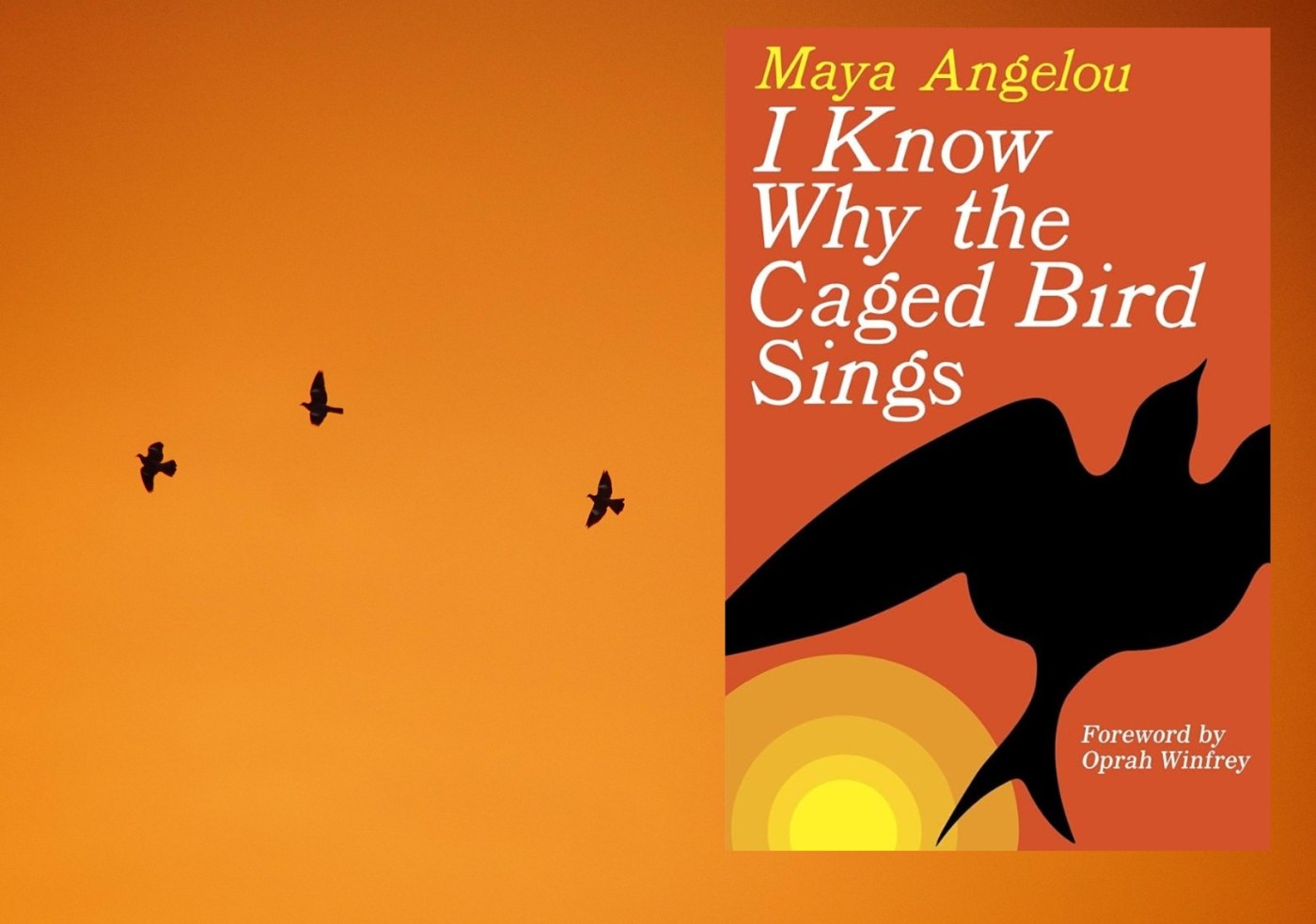
Before reading this book, I regularly came across Maya Angelou’s quotes, and her words often resonated with me. “Try to be a rainbow in someone’s cloud,” “Nothing will work unless you do,” and “There is no greater agony than bearing an untold story inside you” are my favourites. So I was glad when an opportunity presented itself to read the first of her autobiographical books, “I Know Why the Caged Bird Sings.”
Despite the disturbing topics the author touches upon while sharing her memories of her childhood and younger years, surprisingly, it turned out to be a gentle book. While reading, I felt like I saw Maya Angelou smile, her eyes crinkling at the corners. The healthy dose of humour, which she used to describe the bad things that happened to her, shows, in my opinion, acceptance, something that exists on the other side of hate directed not only at one’s offenders but at all humanity. I admire it.
I also felt, though, that the author did not share everything, skipping and blurring some details, mostly about her family. It didn’t affect the enjoyment from reading, as it sometimes does when an author tries to hide something in order to make themselves appear better than their actions or thoughts would have led readers to believe. With Maya Angelou, the reason for evasiveness was different. At least, that’s my impression. I completely understand her wish to shield, for example, her mother from public scrutiny and condemnation.
The part that I particularly enjoyed is where the author shares her memories of the time she and her brother spent living with their grandmother in a small town in the South. Although she had written the book when she was an adult, she managed to convey her memories through the lens of a little girl. And it was fascinating to learn about life in the US in the 30s-40s as a black girl saw and felt it. At that age, we don’t judge, we watch. We draw conclusions according to our still pure system of values, not yet fiddled with by society, mass media, and politicians. When Maya Angelou described the scene where white girls demonstrated disrespect to her grandmother, she told us about what she was thinking and how she was feeling at that moment, rather than what we should think and feel. That is what I loved most about this book. I was offered the facts, not necessarily objective ones, but such as the author perceived them. And I was given the freedom to ponder and decide.
“I Know Why the Caged Bird Sings” by Maya Angelou is a wonderful book, and I highly recommend it.
 Eve's Book Diary
I’m glad that this book is still being read, especially in schools.
LikeLiked by 1 person
I think that it indeed offers excellent learning material.
LikeLiked by 1 person