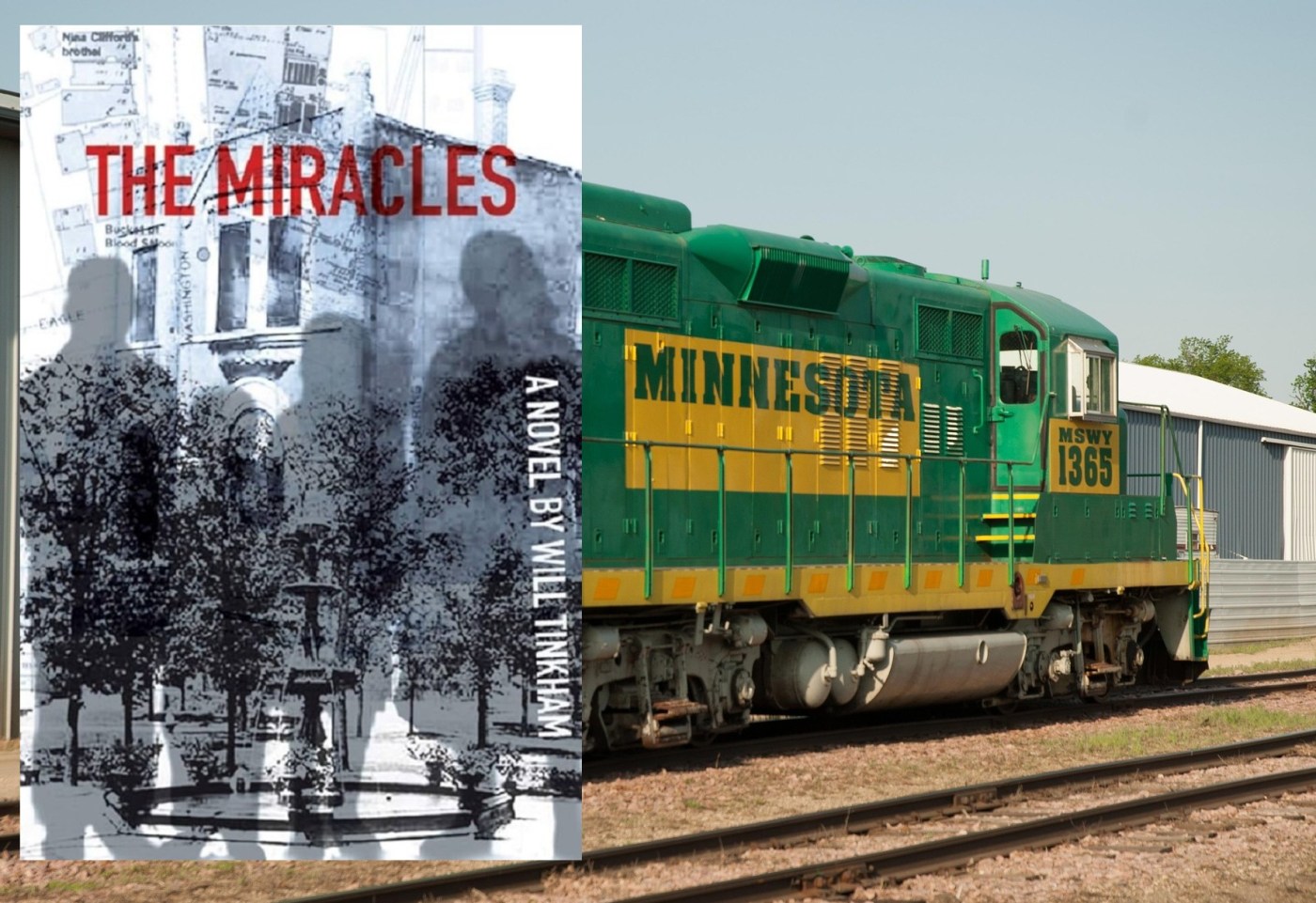
When you think that it cannot get any better, it does – taking your breath away. That’s what happened to me while reading “The Miracles” by Will Tinkham. It is the fifth book of his Americana series that I’ve read, and, although I loved the other four and will definitely reread them at some point, this one, without a doubt, is my favourite.
Where do I start? I am at a loss, to be honest. This book deserves all the praise there exists for a literary achievement. The author masterfully juxtaposes the grim setting of the Prohibition and Great Depression era with the warmth of relationships between people, rekindling the hope that life, though harsh, can still be beautiful. The Miracles, at first sight an assortment of strangers thrown together merely by circumstances, grow into a quintessence of a family, in the best possible sense of the definition.
As Brinda accompanies a group of orphans on an orphan train (I looked up the orphan trains initiative on the Internet, never heard of it before), she is well aware that the three children in her charge will end up in the protectory in St. Paul, Minnesota, where they are headed. An orphan herself, Brinda didn’t leave the orphanage where she grew up, but instead kept helping there. So, she knows that Nicholas, Zane, and Maxine are not adoptable material. What Brinda has no idea about is a plethora of surprises awaiting them in St. Paul.
Tucked between a bordello and a saloon, the protectory in St. Paul could not be located in a more unsuitable place. Yet, its new inhabitants, together with the ‘old’ crowd of the seedy neighbourhood, prove that not everything that shines is a treasure and not all the things that everyone condemns are evil.
The location of the protectory is not the only unconventional thing in St. Paul. The local police chief keeps the place almost crime-free, having struck a deal with gangsters. He doesn’t put them behind bars, and for that, they don’t do their nasty business in St. Paul. The scheme works fine until the shifts in personnel disrupt it, and a new police chief has other ideas of how to do things. The presidents come and go, brandishing loud promises of a better life like the knights their swords. Taft, Wilson, Harding, Coolidge, Hoover, Roosevelt. For most St. Paulites, with crime running rampant and the scarcity of available jobs, there are more important issues to dwell on than who runs the country at the moment.
The book offers an exceptional presentation of the Prohibition and Great Depression era. Even though there isn’t any sugar coating of how things were done in those times, the author throws in a healthy dose of humour and sentimentality. While gangsters kill both the innocent and the guilty, the crooks of all stripes cheat people of money, but the officials are more interested in lining their pockets, hope and kindness remain on the scene. “All kidding aside, if you’ve never had much, giving is all you got,” says Brinda. People keep helping each other, children keep growing, and miracles keep happening.
I could prattle on and on about how wonderful this book is. I could spill my admiration for how totally unexpected the careers that the children in Brinda’s care had chosen were. But the truth is that you’d better read the book than my prattling. I’ll add only that I laughed and cried while reading, and the Miracles had settled in my heart.
 Eve's Book Diary
Leave a comment