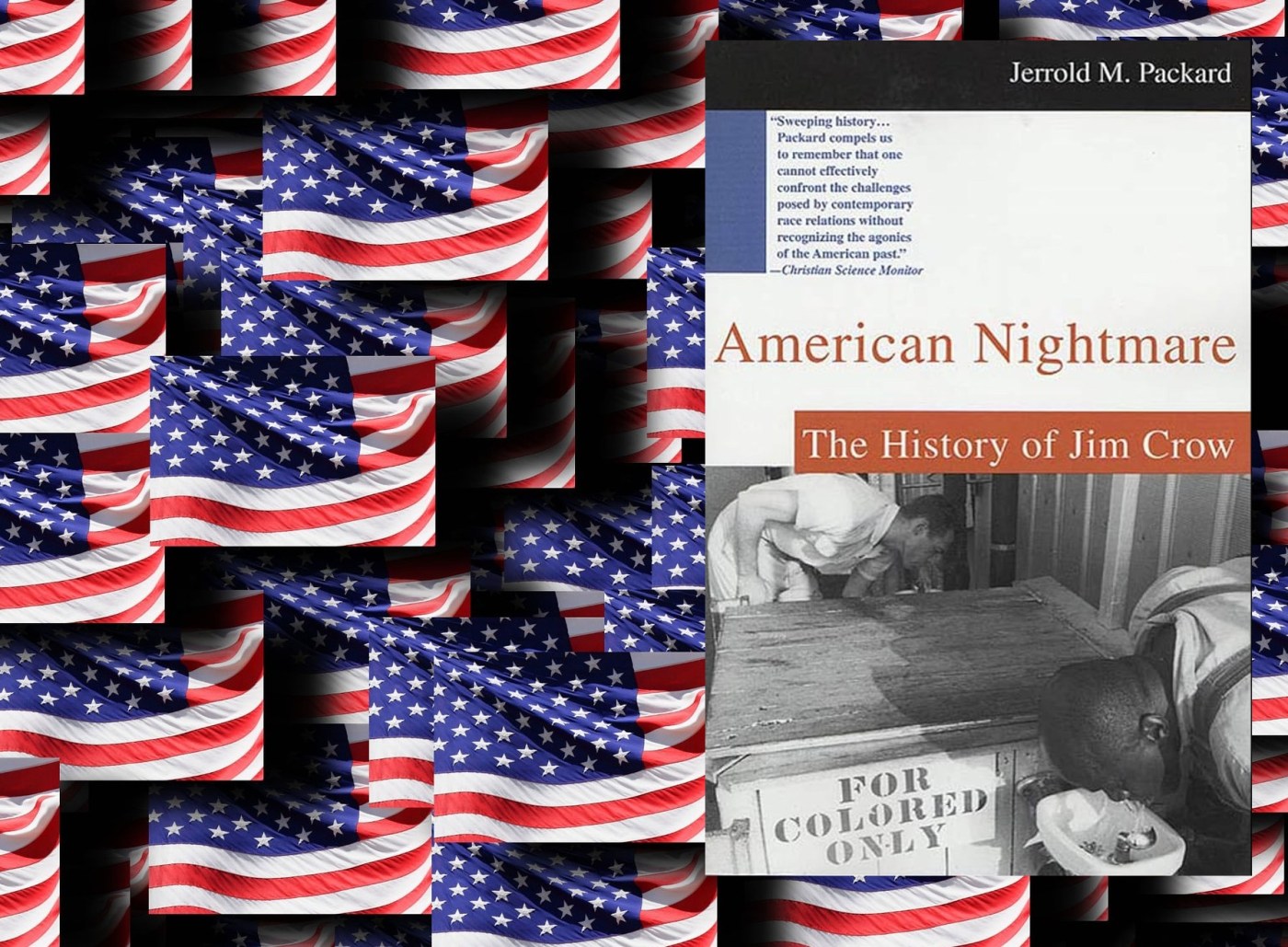
The history of segregation in the United States of America was by far the most interesting course I took at the university while completing my degree. An American professor taught it. It was one of the courses we could choose from among the subjects that constituted the pool of additional courses we had to take to reach the required number of points. It was my last year at the university, and by that time, I had already understood that Marketing was the wrong choice for a future profession. But during that week-long course on segregation, I completely forgot about my career-related worries, so engrossing was the way the professor talked about the topic.
So, a quarter of a century later, when “American Nightmare: The History of Jim Crow” by Jerrold M. Packard appeared in the BookBub email with current deals, I didn’t hesitate to buy it.
History is complicated. It is difficult to evaluate objectively, not slipping into judgments made based on personal experience, trauma, and preconceptions that are instilled in us by our parents, school, etc. It is even harder to form opinions about other countries’ past.
What I learned from living through a controversial period of history is that the seemingly trivial phrase ‘there are two sides to every story’ is actually very true. In fact, often those sides are more than two. It is my strong belief that to say ‘they’ in connection with accusing a group sharing similar characteristics, not necessarily race, is wrong. It is always about an individual or a number of individuals who do something vicious. It is never ‘them’ who belong to the same group as the wrongdoers. Sometimes it is one concrete person. At other times, it is several people. And it also happens that hundreds, thousands, and more participate in harming others. Alas, anger, pain, and a wish for revenge are powerful stimulators that overshadow our minds and rob us of logic.
“American Nightmare: The History of Jim Crow” by Jerrold M. Packard is a meticulous account of the century-long suffering of African Americans after the Civil War had freed them. In many ways, after they had stopped being slaves, their status had not changed. Life circumstances of many even worsened, considering that they had stopped being property, something that had value, and turned into those whom ex-masters feared and despised. And that fear and contempt did drive people to unimaginable extremes.
As I mentioned at the beginning of this review, I’d had some idea about segregation before. But I’ll be honest, reading this book, the extent of it had shocked me. It touched every single sphere of life, making it impossible to ignore. Another thing that disturbed me deeply was the violent racial riots that had cost many African Americans their lives, businesses, and homes. As a result of one of such riots, a flourishing neighbourhood was destroyed, where people had managed to build a decent life for themselves despite the discriminatory Jim Crow laws. I think that I’ll be processing this for a long time.
Some moments in the book slightly marred my overall impression. There is absolutely no doubt that African Americans were terribly mistreated. Nothing can justify lynchings and putting human beings into an inferior position based solely on their race. Still, describing one horrifying lynching case, the author mentioned in passing that the man who was punished stabbed the white landlord’s son. What the crowd did to the offender was absolutely inexcusable, totally awful, and strips those people of the right to be called ‘human beings.’ And yet, it shows that not everything that happened in the Jim Crow years can be viewed from a one-sided perspective.
I recommend this book to those interested in the subject. “American Nightmare: The History of Jim Crow” by Jerrold M. Packard is a detailed research of both the discriminatory regulations and real-life stories. But this isn’t a fast-paced read. As I understand the author’s intention, it wasn’t to keep readers entertained, but rather to provide them with all-encompassing knowledge.
 Eve's Book Diary
It is great to know the book ‘American Nightmare: The History of Jim Crow” by Jerrold M. Packard’ exists to provide insights into a source of trauma among those affected.
Thanks for your sharing your in-depth understanding as well.
Do you see a parallel between the events of the past and what is going on at present?
LikeLiked by 1 person
Thank you so much for reading this review and your feedback. It is invaluable to know that your words didn’t fall into the Internet void.
It is difficult for me to say if there are similarities between the Jim Crow era and present times in the USA. I live in Europe and have been in the US only once. Understandably, I was focused on national parks and sightseeing rather than politics. What I can say, though, is that history certainly repeats itself. And more often, those are repetitions of something ugly. It saddens me to witness how easily people can be persuaded that some group of people is ‘bad.’ The reasons for them being declared so differ, but the fact remains. People fall under the influence of persuasion and don’t take pains to make their own conclusions.
LikeLiked by 1 person
Thanks for sharing your thoughts with me.
Europe is quite a different world from the USA but there is still a lot to learn from both societies. I do try to make informed decisions about any situation, incident or news, to avoid making a prejudicial decisions.
I do hope you will have a great year.
LikeLiked by 1 person
Thank you so much for the kind wishes. I also hope that 2026 will be generous to you in every life aspect.
Yes, you are right, the USA and Europe have many differences, and often, we struggle with forming an unbiased opinion on various events. That’s why I am always cautious when I am presented with radical views. It is a manipulation, and I don’t want to be manipulated at least where it is possible. Economics can’t be fought back. You must pay the bills, etc. Yet, politics is something that you can withdrew from participating. Especially when you are expected to judge and condemn.
LikeLiked by 1 person
As a public librarian, I’m waiting to see how long it’ll take for this book to end up on “Banned Books” Lists.
LikeLiked by 1 person
I sincerely hope that it won’t happen. We need such books to have a chance to form an opinion about serious matters.
Yet, to stay on the safe side, I do purchase paperbacks of my favourite books, in case they vanish from bookshelves. Ebooks are too easy to erase collectively.
LikeLiked by 1 person