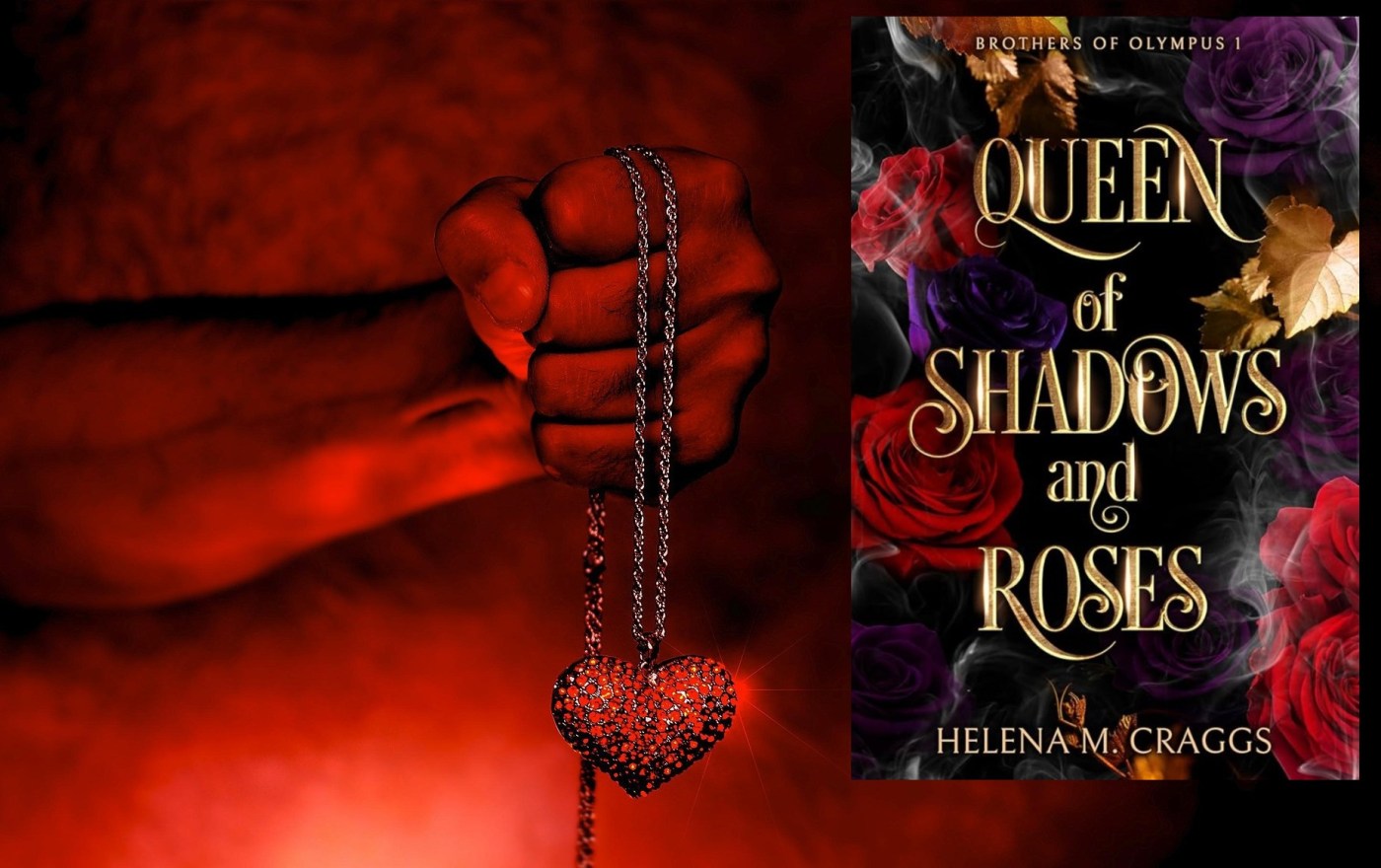
Wow, what a guilty pleasure of a book this one has turned out to be! Reading it was like eating a dark chocolate fondant, rich and sweet, with a hot, gooey filling inside and cold ice cream on top. Beware, this story will make you see seductive dreams about Greek gods with athletic figures, indefatigable in any pursuit – yes, in love as well!
“Queen of Shadows and Roses” by Helena M. Craggs is a retelling of the popular Hades and Persephone myth. In this version, the gods had seized power over the mortal world, eliminating magic as one tool that could have stood in their way. The wife of the god of the Underworld disappears, and here we are, the complete change of world order follows. Who said that being a god was easy?
Gods now walk among humans, imposing their vision of how people should live. And in some aspects, they have made life on Earth better. Still, considering that human beings oppose anything that limits their will – even if it is a choice to be miserable – certain factions plot against the gods’ dominance and prepare to strike.
At the same time, Hades discovers that his infinite power over all things dead is not enough to make him happy or even satisfied. He longs for his lost wife. He needs Persephone, not only to feel whole but to return balance to the Underworld. Alas, when he does find her, the bitterest disappointment awaits him. His beautiful wife, the goddess of spring, vegetation, and fertility, is not the woman he had married. As if it wasn’t enough that she was taken from him, she had been reborn. She doesn’t know who she is, and moreover, she believes that gods are her number one enemies.
If Hades had ever thought his mission of keeping the Underworld running smoothly was difficult, the time has come for him to reconsider. To make his own wife love him again is an infinitely more complicated task. Besides, his brother dear Zeus doesn’t make this task any easier by announcing that a competition for Persephone’s heart is open to anyone.
“Queen of Shadows and Roses” is spicy, edgy, and uncompromising in portraying Greek gods as arrogant, self-absorbed, yet more like humans than they’d like to admit. Gods make mistakes, too, even though they have more resources to fix them.
 Eve's Book Diary
Leave a comment