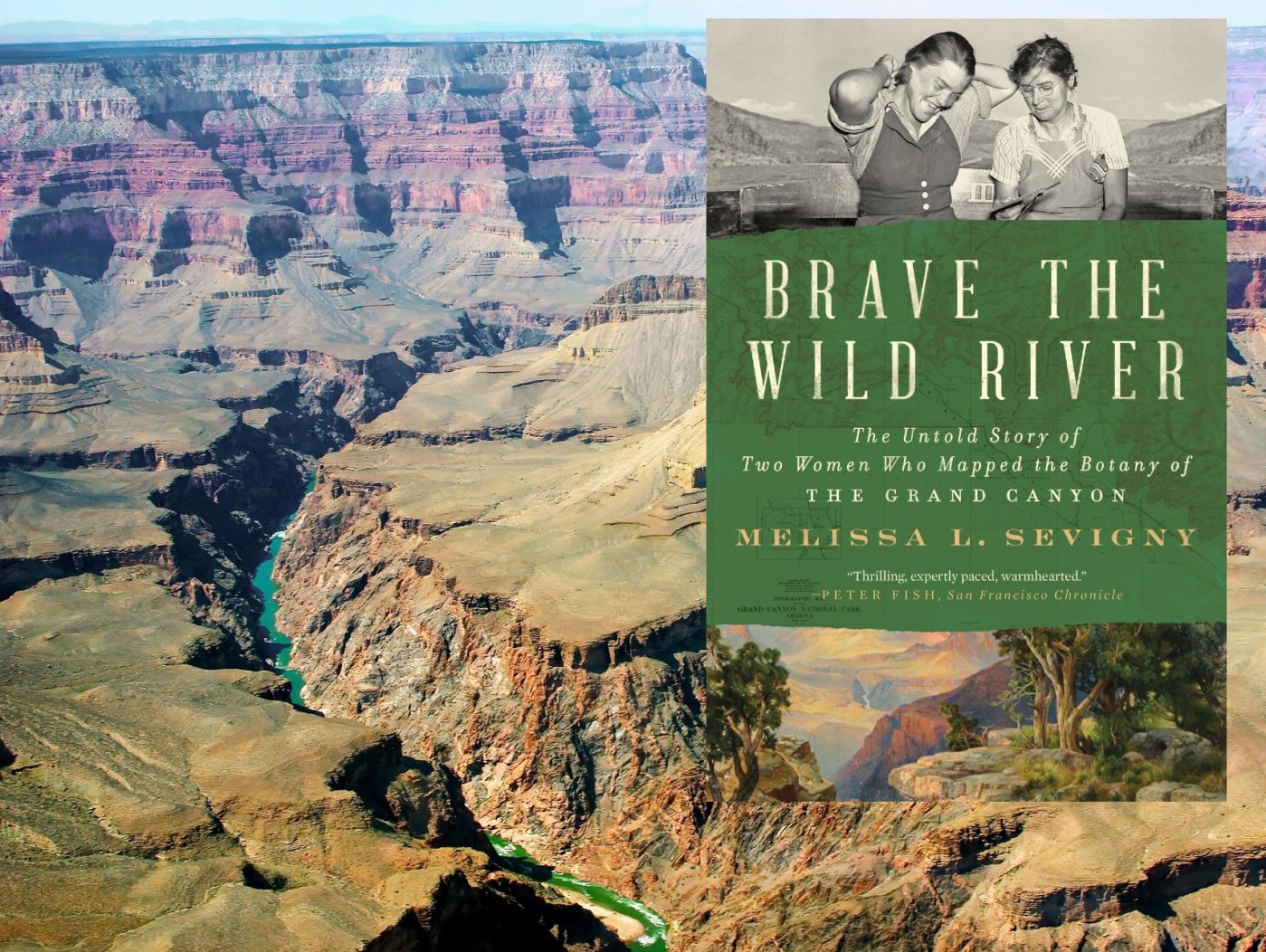
“The spell of the canyon is awfully strong and it holds something of me I know it will never give up.” These words belong to Haldane ‘Buzz’ Holmstrom, the man who had made the first successful solo expedition down the Colorado River. It was considered a reckless endeavour a century and more ago, and that’s why those who did run the river, even if not alone and carefully equipped for the awaiting perils, were seen as heroes. You can fully understand why it was so, looking down at the canyon’s walls hiding the blue band of the Colorado River at Powell Point, one of the lookouts along the Hermit Road Trail in the Grand Canyon National Park. I consider myself lucky to have caught at least glimpses of the Grand Canyon during our trip to the US in 2024. Even a few days we spent there were enough to feel how piercingly true the words of the renowned adventurer are. Indeed, after more than a year, deep inside, I still feel the yearning to see the Grand Canyon again.
Like many others, Holmstrom was sceptical at first about the two women’s plan to run ‘the most dangerous river in the world.’ Yet, he changed his mind after he met both.
In 1938, it was already shocking enough if a woman chose a career over family. But when a woman decided to do something even a rare man had the courage to attempt, it was viewed as outrageous. So, predictably, when Elzada Clover announced her plan to run the Colorado River, to catalogue the thorny plants, she wasn’t met by applause. In the eyes of society, her academic career in botany was something like the extension of an innocent female hobby to gather flowers and dry them before putting them into an album. She wasn’t supposed to ‘get her hands dirty.’
Despite the opposition and discouragement from everyone – their families, colleagues, journalists, veteran river runners, etc. – in the summer of 1938, an assorted group of six people who would unlikely have a lot in common if brought together under other circumstances set off to traverse the Colorado River, known for swallowing even more experienced travellers.
I could have written a lot about the thoughts and emotions this book evoked, as well as shared the episodes that made me laugh or others which made my heart clench with that yearning to take in the impossible might of the Grand Canyon again and feel my palms pulsate with the almost mystical hot energy whenever I looked out at its endless vistas. Instead, I will only say that “Brave the Wild River” by Melissa L. Sevigny is one of those non-fiction books that pulled me in and held me in its grip against all odds.
I am not interested in botany, and the book is replete with plants’ names, also in Latin. I am not a fan of travelling without comfort to test my stamina. It never crossed my mind to go rafting, not in the waters of the gentle rivers of my homeland, Latvia, let alone trying the wild version of it offered for tourists visiting the Glen Canyon. And, to be completely honest, I am not a supporter of the slogan ‘women are capable of everything that men do.’ Well, I do believe that some women are, but, at the same time, I don’t think that every woman must. Anyway, this isn’t a subject to be covered extensively in a review. What I wanted to say is that, despite all the things that could have spoilt this reading experience, I could not put this book down. And it has left a lasting after-effect on me, which I am still processing. Just like I am still processing the impressions and memories of seeing one of the greatest natural wonders in the world.
Clinton Hart Merriam, an American naturalist, zoologist, mammalogist and a lot more, after the 1889 expedition from the San Francisco Peaks to the Grand Canyon, said about the latter that it is “a world in itself.” I think these words explain all.
 Eve's Book Diary
Leave a comment