
It took me a while, but here it is, the second part of our big journey across the American Southwest. After the red deserts of Arizona, we drove almost 1000 km to see a different natural wonder – this time, bathed in green.
The aim of our US trip was to see what we can’t find in Europe. Grand Canyon and Antelope Canyon were number one on our list. And right after them followed giant sequoias.
We spent two days with our friends in Flagstaff, Arizona, taking some rest after hiking, driving, and the June heat, and set out to California.
When I say that our June trip to America is a journey of a lifetime, it isn’t really an exaggeration. Active traveller since the age of a year and a half, I haven’t travelled much in the last decade.
I was reluctant to travel after my son was born and was still little. I know that nowadays people travel extensively with infants and toddlers, but for me, travelling isn’t about going somewhere and being somewhere. I crave the immersion in an unfamiliar atmosphere, absorbing and processing it, transforming what I see and feel into my perception of a different country. Caring for a small child was too consuming for me to be able to enjoy travelling.
We still ventured to neighbouring Estonia for our 10th wedding anniversary when our son was a year and a half and then went to Italy for a week-long vacation when he was five. The next year, the pandemic started.
I know that the lockdowns didn’t last for five years, and that a lot of restrictions had been lifted before the pandemic ended. But I happen to have a very inconvenient chronic condition considering the specifics of covid. Pharyngitis. Which means that coughing is my middle name. Knowing that I can’t cough in public basically transferred the real disease into a psychosomatic category. Knowing that I cannot cough in public made my throat itch violently.
Luckily, exactly during the lockdown times, I started writing, and it kept my thoughts off of travelling for a while. Until, one day, after having written six books and dipped a toe into – okay, drowned in the book marketing, I realised that I miss my other passion. My husband, seeing that I stopped being a happy writer, said that now no one would panic if they hear me coughing. But when he asked where I want to go, I said that I’ve seen enough of Europe. I said it was time to make the dream we both have had forever come true. It was time to visit America.
Okay, enough with the sentimental. Time to share about the sequoias. Which proved to be the most amazing creations of nature I’ve ever seen.
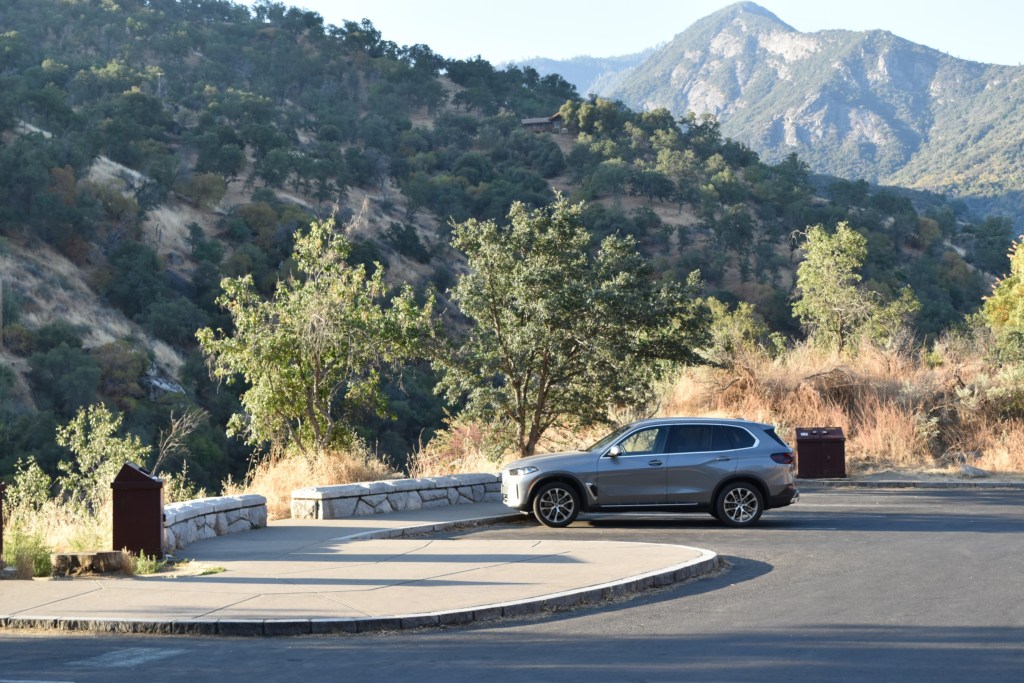
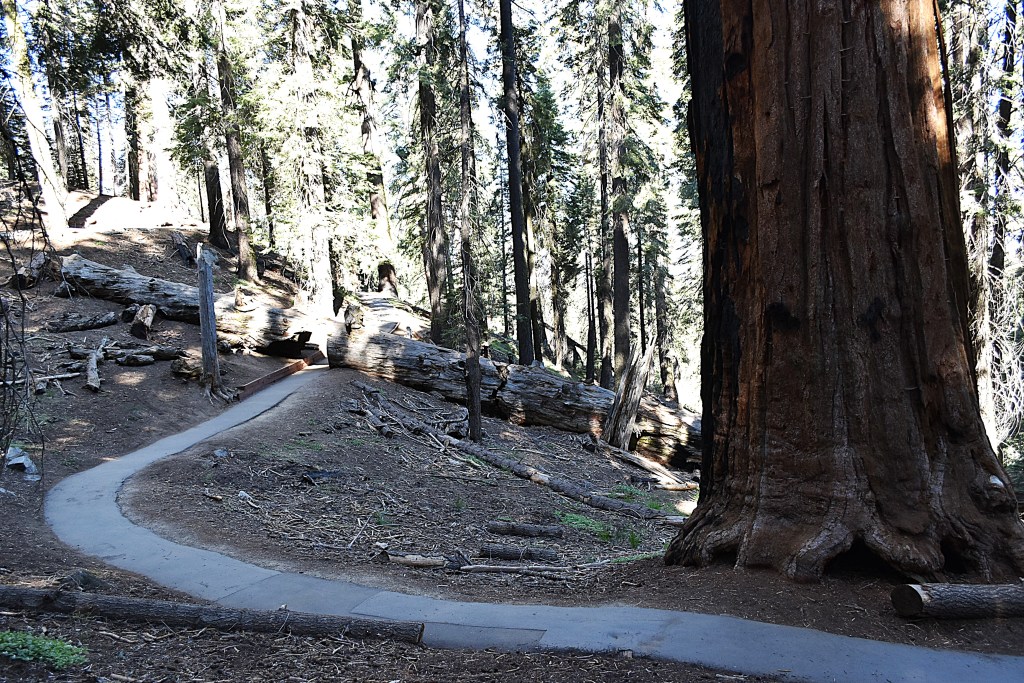
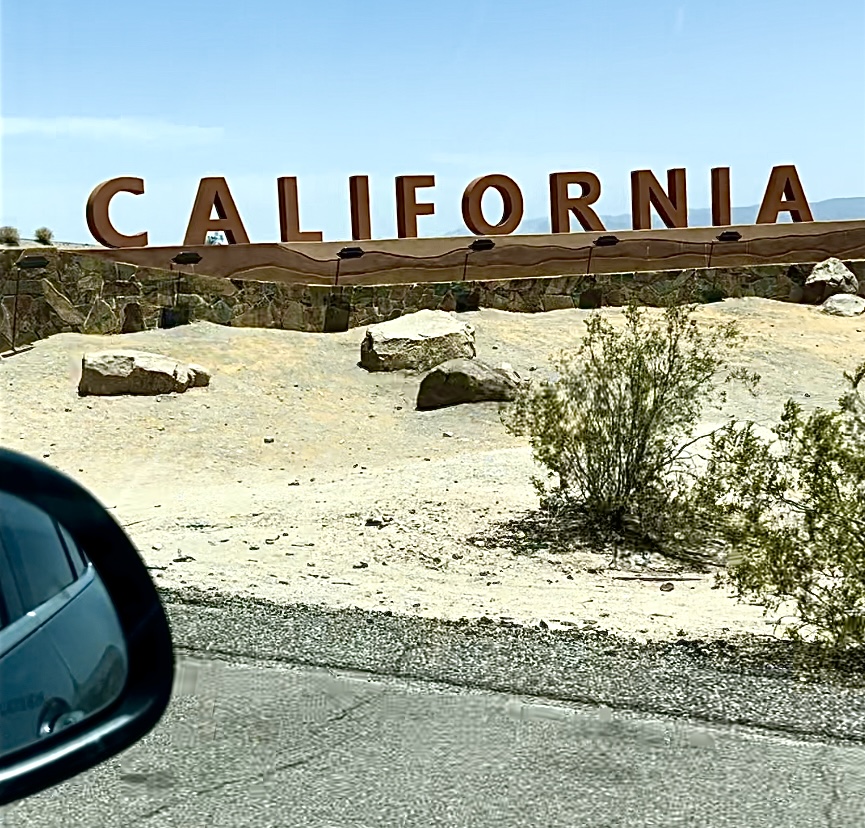
The drive from Flagstaff, Arizona to Three Rivers, California, with an overnight stop in San Bernardino, California, was the longest in our three-week trip. We decided it wasn’t wise to drive 600 miles / 1000 km in one day, thus the night in San Bernardino. Still, even with that stop, we were rather exhausted when we arrived in Three Rivers. And what a tremendous relief it was that the house we rented through Airbnb was even better than we imagined it from the pictures and description.
During our US trip, we stayed in 8 different accommodations – motels, hotels, rented houses – and my son says that the Double Gum Tree Farm in Three Rivers, California is his favourite of them all.
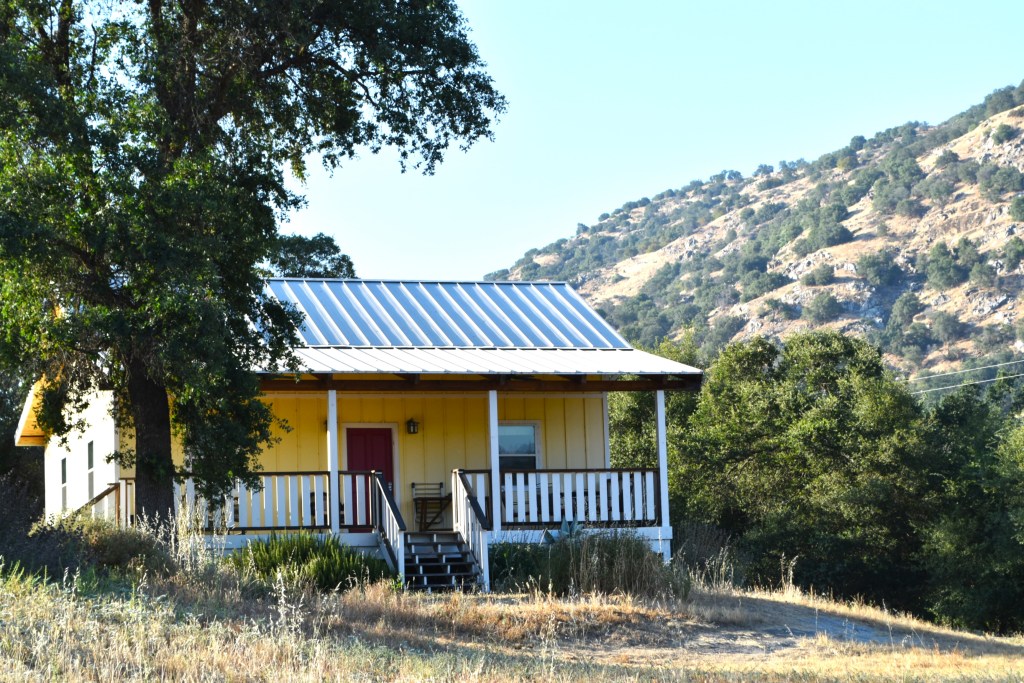
The small house situated on a 10-acre farm was a perfect sanctuary for us. On the one hand, staying not in a hotel means you have to either cook or eat all your meals somewhere. We bought everything we wanted in nearby Visalia before heading to Three Rivers and were happy to make home-cooked meals after hours spent on the trails up in the Sequoia National Park. We could sit on the terrace and keep enjoying the magnificent nature.
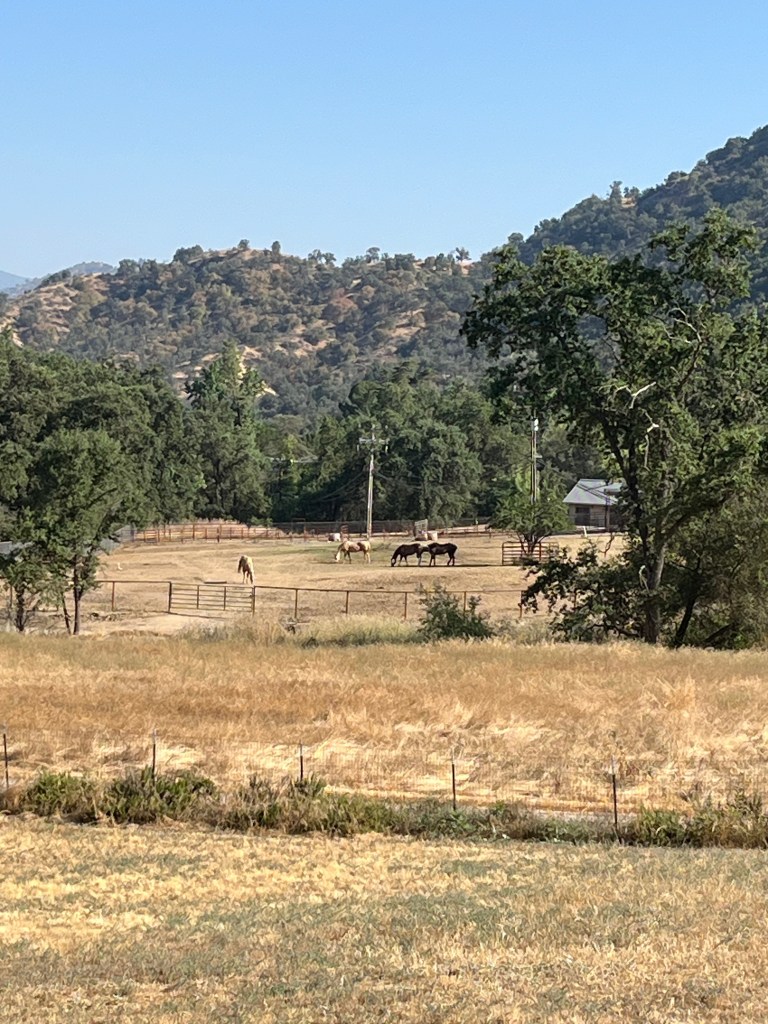

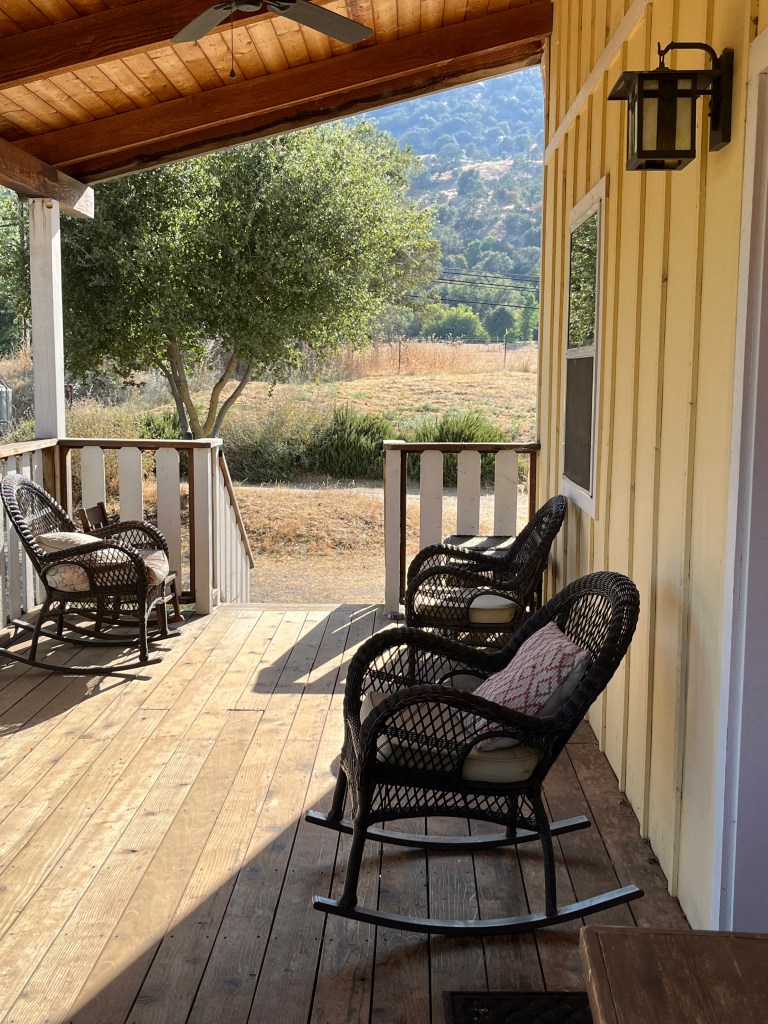
I chose this house because of its location, the closest you can find to the Sequoia National Park – approximately 8 miles from the Park entrance. We didn’t want to see the giant sequoias in passing. We wanted to experience them, for they are among the true wonders of the natural world. I have lived near the forest all my life. And I can honestly say that even after taking walks there for over four decades, sometimes, like in the summer, every single day, I remain in awe of the beauty of our fir trees.
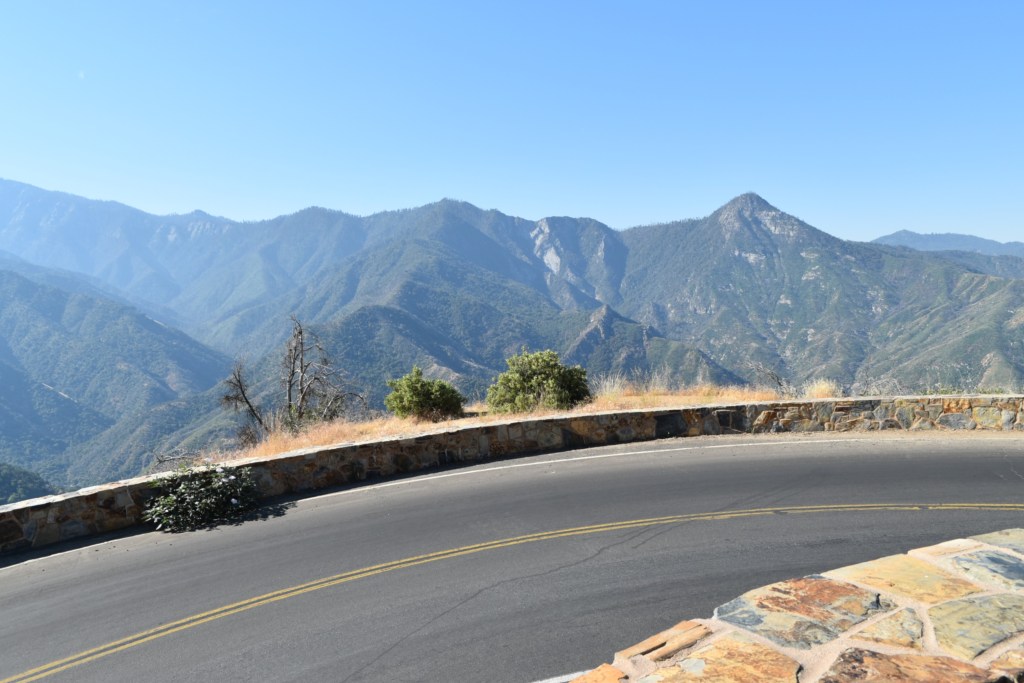
The Double Gum Tree Farm happened to be off the main highway, so we enjoyed a real countryside stay feel as well. And our kind hosts even brought us fresh eggs, leaving them on the porch while we were admiring the giant sequoias. We stayed there four nights and drove up to the Park to explore the trails three times. It indeed proved to be a challenge – the road is a madness of hairpin bends that goes for about ten miles. On the first day, my son felt sick and we had to stop for him to endure the trip. But the next day we were smarter and took our breakfast with us to eat directly before starting on the trail. It was a great solution, for our son’s stomach problems didn’t repeat after that.
The trails we managed to do in three days exploring Sequoia National Park.
- General Sherman Tree Trail – crowds like we haven’t seen anywhere.
- Congress Trail – did this one twice.
- Moro Rock Trail – walked up twice as well.
- Tokopah Falls Trail – turned out to be more challenging than advertised.
And to continue with statistics, here are some facts that make giant sequoias unique:
- Giant sequoias are native exclusively to the western slopes of the Sierra Nevada mountain range in California, USA. But given the right climate can be planted and grown in many places around the world;
- First documented by Europeans in 1852 by Augustus T. Dowd; scientifically named in 1853;
- Typical height: 50–85 meters / 164–279 feet. Record 94.8 meters / 311 feet. The largest giant sequoia is taller than a 26-story building;
- Trunk diameter ranging from 6–8 meters / 20–26 feet;
- Lifespan – over 3,000 years. General Sherman is the largest living organism on the planet. It is 2,100 years old;
- Sequoia cones are small (4–7 cm /1.5–3 in long), but can remain closed for up to 20 years, often opening after exposure to fire;
- Giant sequoia is a powerful ally in combating climate change;
- Sequoia bark is fire-resistant;
- Sequoia root system is rather shallow, but it spreads widely, intertwining with neighbouring trees to form a network of stability and support;
- Giant sequoia trees never stop growing until the day they die.
Moro Rock Trail
Our first trail in Sequoia National Park was not to see the giant sequoias but to climb the rock.
There are several granite domes in the Park. Some are relatively easily accessible by trails, others only through established climbing routes for experienced technical climbers. We chose to climb the Moro Rock Trail because it was the first stop of interest upon entering the Park, and, second, for that trivial reason that the information about how to get there was the easiest to find.
It’s actually one of the slight drawbacks we discovered in Sequoia National Park. Information about the trails and other vital things was somewhat messy and quite tricky to untangle. That’s why we decided to visit the places we had a clear idea of how to get to.
Moro Rock looms thousands of feet above the Generals Highway, and we saw it while driving this ‘thousand-hairpin bends-road.’
For those who had enough of driving, having overcome the treacherous highway, the option to use free shuttle buses to all main attractions is provided. You can leave the car at the Giant Forest Museum and take a free ride to Moro Rock. Again, not to complain, we found the free shuttle bus system here a bit confusing and not easy to use. For example, for the life of us, we couldn’t find the bus stop we needed by the Sherman Tree trailhead. We figured it was located somewhere quite far and required additional hiking and decided to take the car instead. Yet, it posed another problem – all parking lots in the Park get packed after noon.
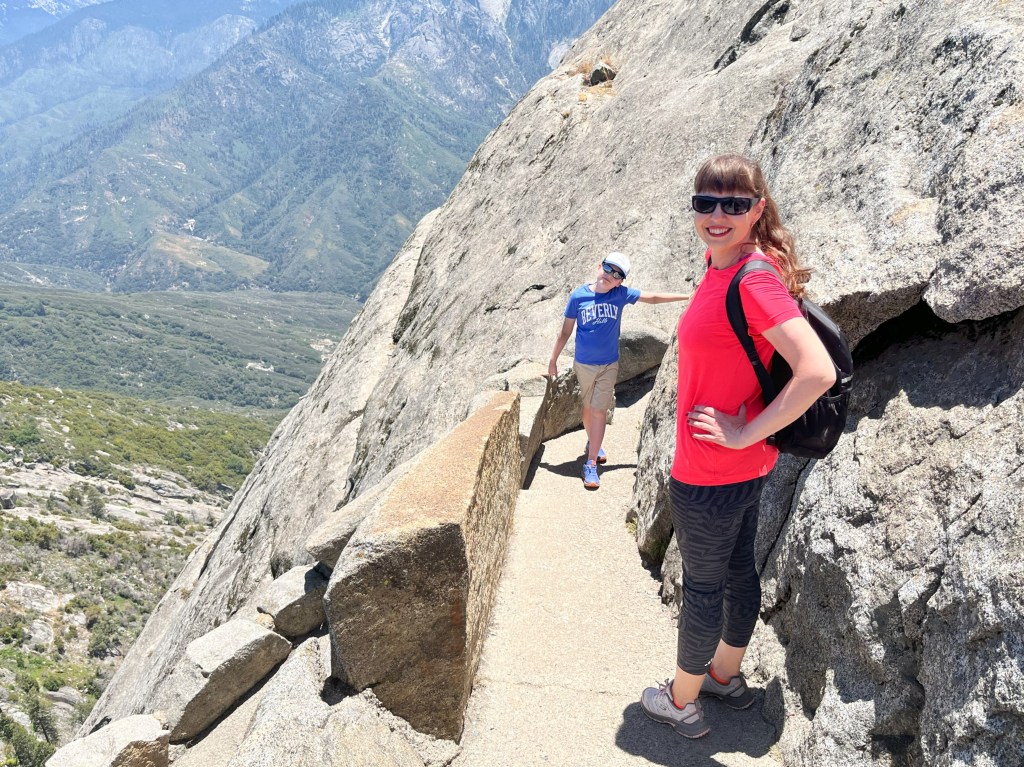
To get to the top of Moro Rock you have to climb over 350 steps of a concrete and stone stairway. The hike up is not too difficult, many people climbed with small children, and we also saw elderly people there. There are handrails along the way in some places. Still, it isn’t too easy. So, be prepared to use your stamina.

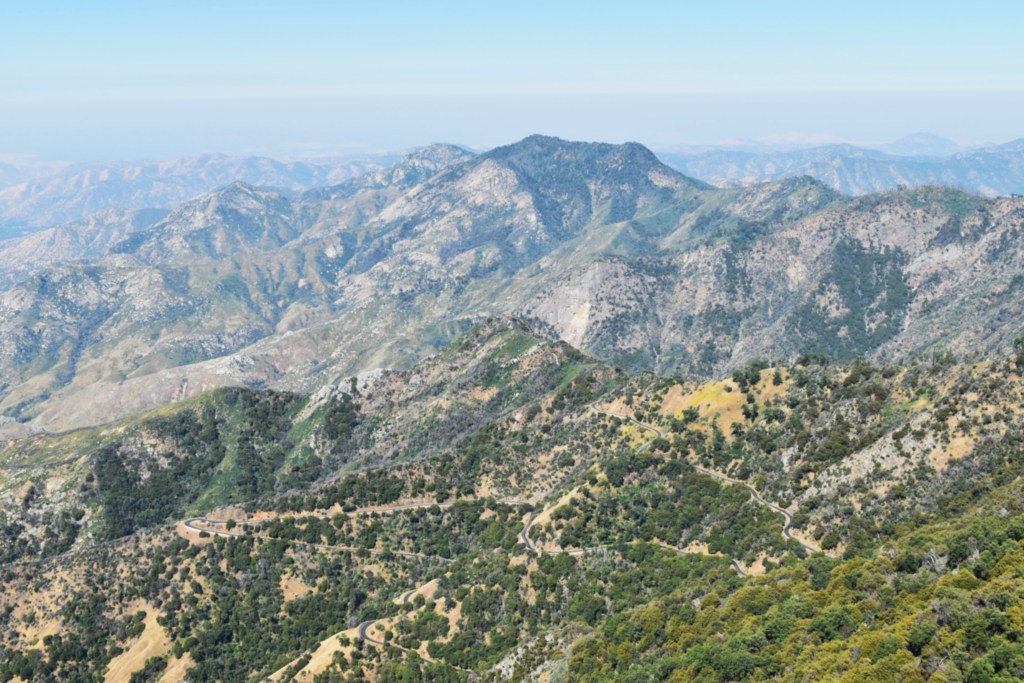
The views from the top are spectacular. And while going up, you can enjoy the view of the curvy highway you’ve just driven to get here.
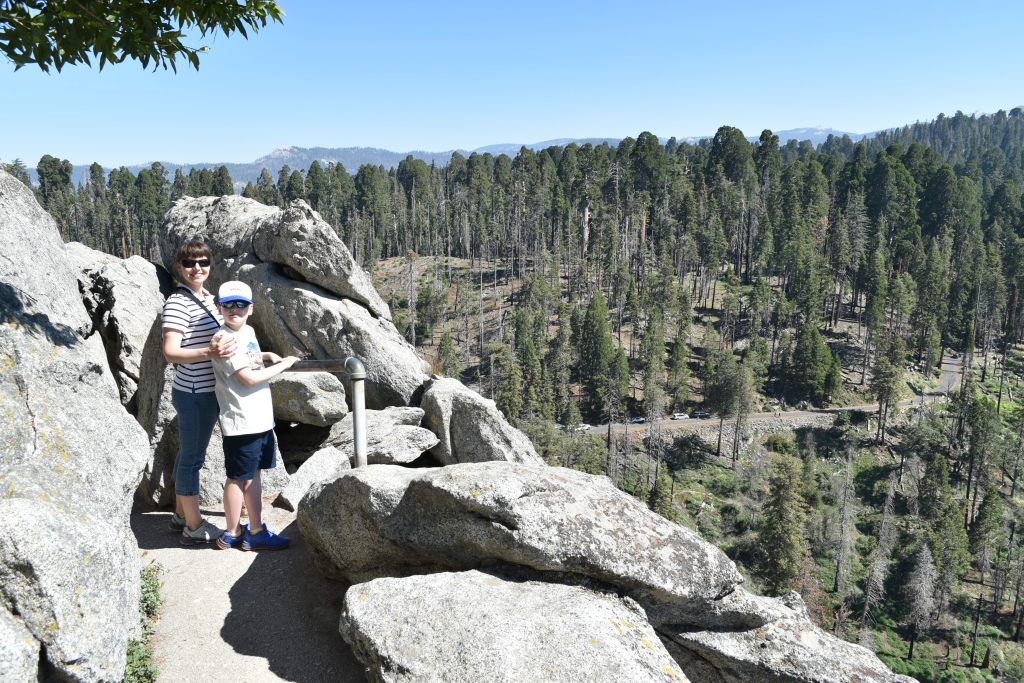

Moro Rock rises 6,725 feet / over 2 km above sea level.
The Moro Rock trail stairs in some places are narrow. You have to stop to let people pass where there is room for only one person.

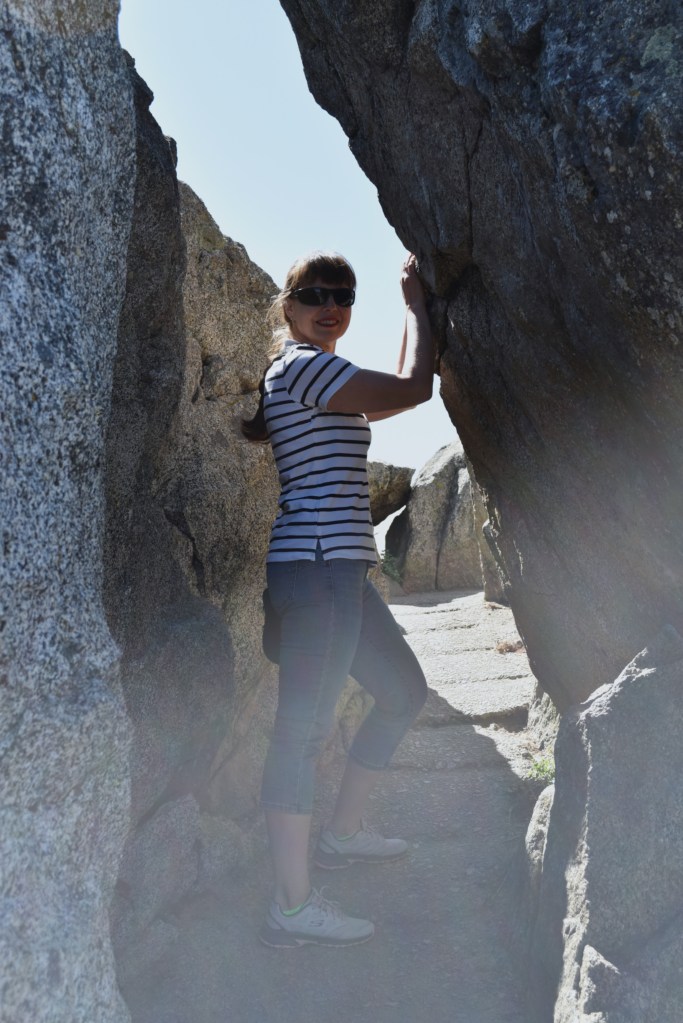
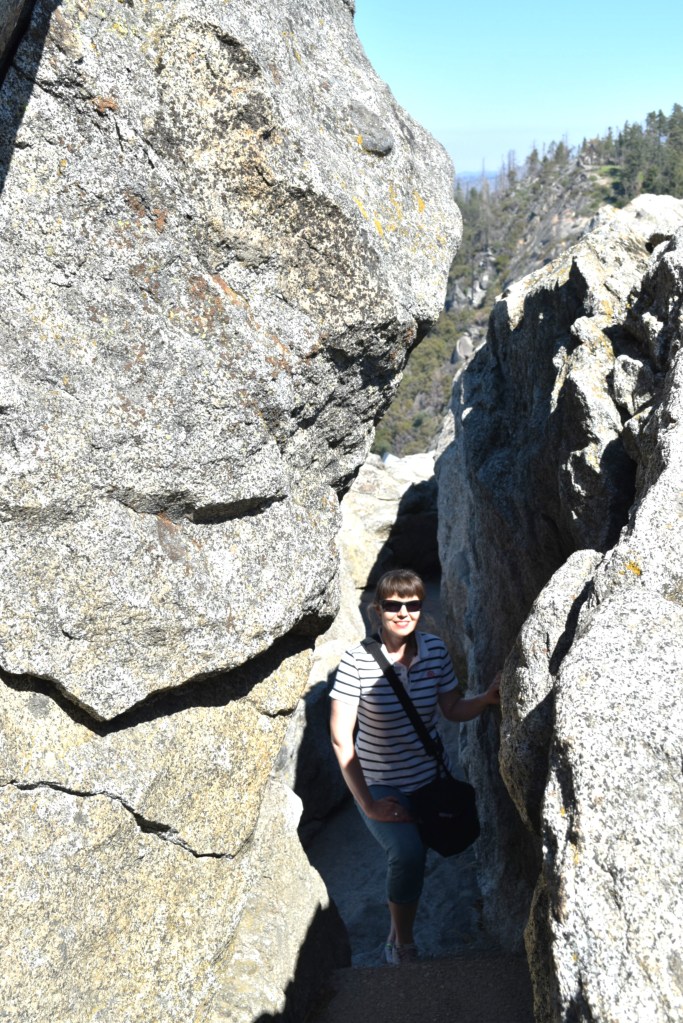
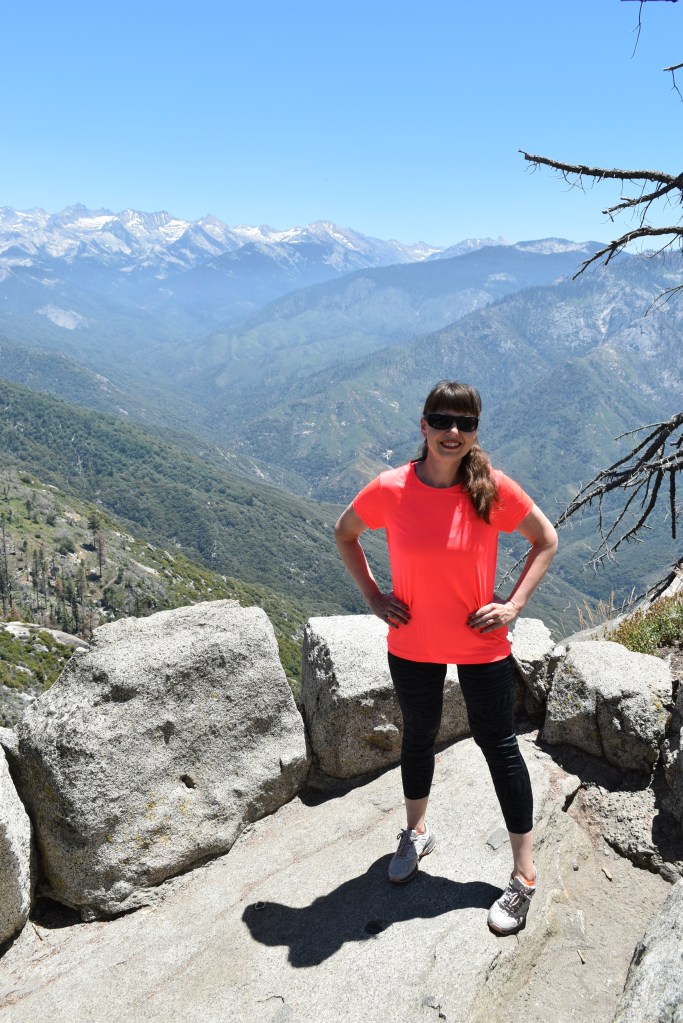
Apart from the main viewing platform on the top, you’ll find a few other places to stop, take in breathtaking views and catch your breath. From the main viewing point (where we are standing in the picture) you get panoramic views of the Sequoia National Park below. I can imagine how different these are in different seasons. Experienced hikers say that in the fall, you enjoy the vivid colours of leaves against the white backdrop of snow-covered mountains. And in spring, you can get a glimpse of a wildflower carpet on the slopes. And also, the luckiest ones might even notice the bears going around their business in the forest below.

I’m not sure I’d risk climbing here when the stairs are partly covered in snow, but, even though summer is undeniably beautiful, I’d definitely want to see these unforgettable views in some other season.
General Sherman Tree Trail
Our next stop was the most popular hike I guess everyone visiting the Park does. The General Sherman Tree trail. And here, we did something we did ONLY in America… Waited for half an hour or even longer in a queue to take a picture at a popular place.
⠀
Here is that famous image. My son and I – and a magnificent General Sherman. Not the guy who burnt Atlanta during the Civil War – guilty, have been indulging in rereading “Gone with the Wind” again recently – but the largest (by volume) known living single-stem tree on Earth.

We’d never have done anything like it had we been closer to home. We even didn’t go to our famous Christmas market in Riga Old Town over the holidays for the sole reason that it is very very crowded. But when we were in the Sequoia National Park, having crossed the ocean to see the giant trees, having driven that crazy road with hundred hairpin bends to get there…well, it would’ve been plain silly not to take that picture with General Sherman. So, we did it, and now, looking at it in the printed photobook – it looks more impressive there than on a small phone screen – I am glad that we didn’t skip it. Who knows if we ever come to Sequoias again, but the picture will remain in our memories and archives.
Some facts about the General Sherman tree.
- Weight: 1.9 million kg;
- Height: 84 m;
- Date seeded: between 700 BC and 300 BC;
Just think about it, this tree is more than two thousand years old! - Volume of trunk: 1,487 m3 (52,500 cu ft).
Congress Trail
Our third hike in the Sequoia National Park, after the Moro Rock Trail and the General Sherman Tree Trail, was the Congress Trail. It begins just off the Sherman Tree trail and is around 2 miles / 3.2 km long, and if you want to really see the giant sequoias, this is where you should go.

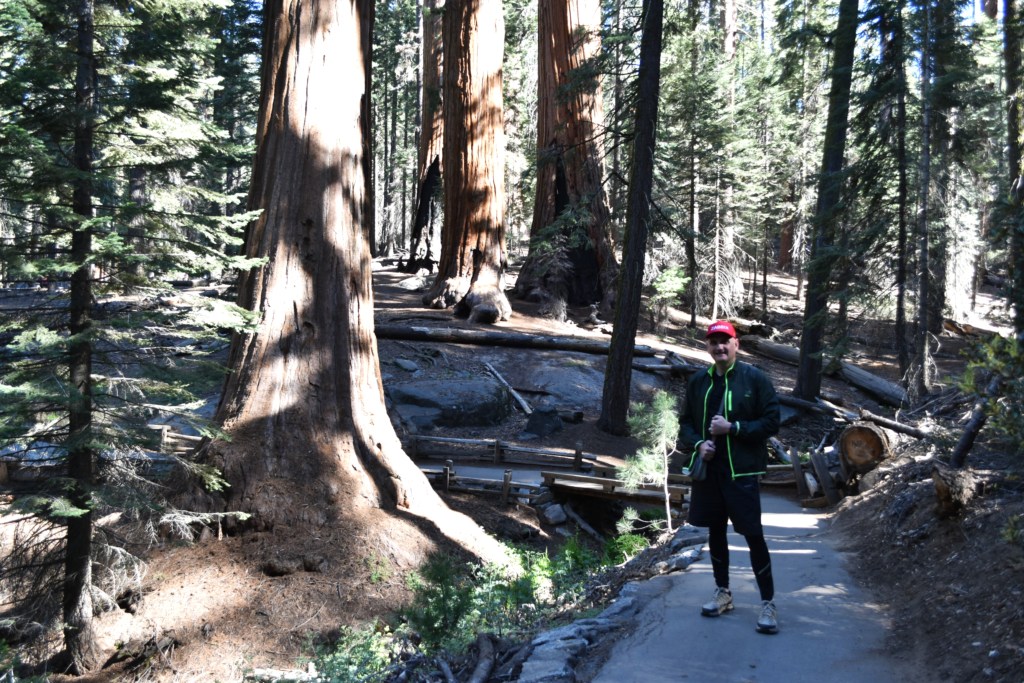


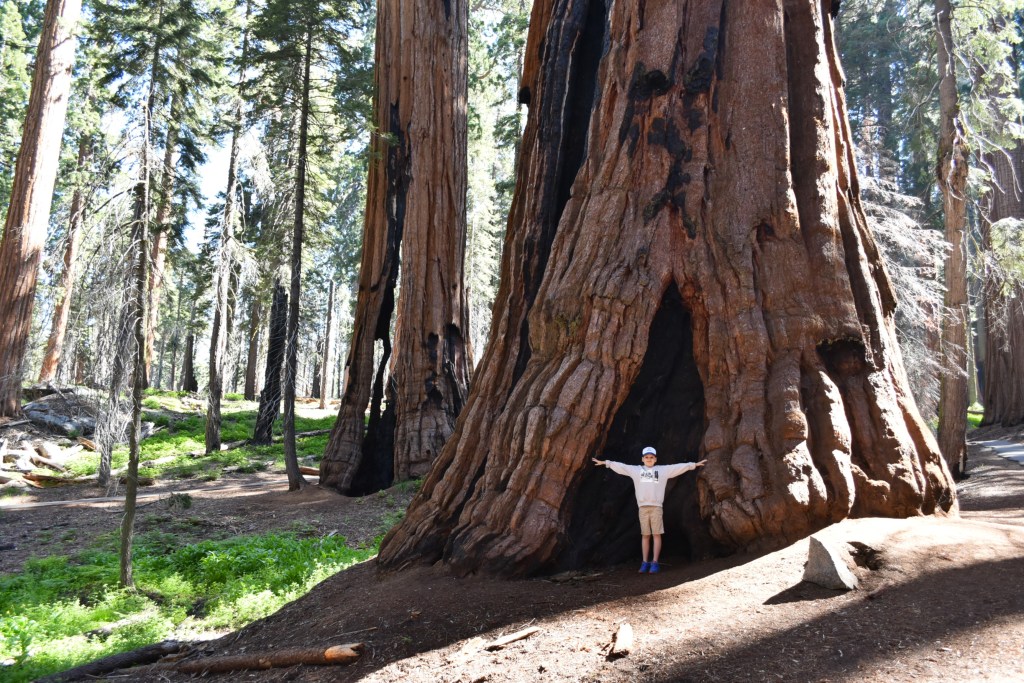
On our first day in the Park, we first did the Moro Rock trail, then went to the General Sherman. And when we started on the Congress Trail, it was closer to the afternoon, which means the visiting peak time. And yet, there weren’t too many people on the trail. If not for one family, it would have even seemed that we were alone there.
That family’s head apparently wanted to demonstrate to his kids the natural way of living. Walking shirtless, he splashed in every shallow stream and climbed on the big boulders, staying at every place for too long, thus forcing other Park visitors to skip some places of interest. It is, of course, lovely, but the problem in such touristy places is that it is expected that every visitor gets their small share of impressions and beauty. It is a kind of unwritten code of behaviour. This family was amusing to watch – in the kindest possible way – but if everyone behaved this way in popular places, for many people, the experience would be spoiled.
We returned to do the Congress Trail again the next day and came here first thing in the morning before nine o’clock. And yes, this time we had the incredible beauties almost all to ourselves.
All giant sequoias along the Congress Trail have important names. Here, you’ll see the House and Senate Groups, the President, Chief Sequoyah, General Lee, and McKinley Trees.


There was one oddity that made us smile while we were travelling in the USA.
It’s not an oddity really. I’d say it is logical that across the ocean, people don’t know where a small country like Latvia is located. Yet, I know that a lot of people here at home would feel offended by such ignorance. I remember how at her concert in Riga, Mariah Carey mispronounced our country’s name. The next day, all the articles in the media began with a description of the singer’s blunder.
Well, our family isn’t so sensitive. We find it funny that we can cause surprise by telling people abroad where we are from. So, I’m sharing this as a joke and not because we’ve returned home holding a grudge.
No one, virtually not a single person we spoke to – apart from our friends, of course – knew where in the world Latvia is. From the confused expressions we could see that to them, it could be anywhere, in Asia or Oceania or maybe one of the islands off the shores of South America. Only one woman, who worked in the Monterey Bay Aquarium, had a remote idea of our country’s location since she had friends or relatives in Finland.
This year, the animation movie “Flow” with – I knew it! – a cat as the main character won an Oscar. The first ever for Latvia. In the Best Animated Feature Film category. Snatching the award from such huge blockbusters as “Inside Out 2” and “The Wild Robot”. “Flow” is an independent film, and I guess you understand what it means for me as an independent author. It gives hope that independently produced art has the hope to get recognition. So, I hope that my beloved homeland – seriously, the best place in the world to live – will become better recognised in the international arena.
Tokopah Falls Trail
Sequoia National Park is not only about sequoias. When planning our 3-week trip to the US last summer, I wanted us to have different experiences in every place we would visit. Reading about hiking trails in the Sequoia National Park which would fit our abilities – we travelled with our then 9-year-old son – and were reasonably located so we wouldn’t have to spend hours driving to the spot, Tokopah Falls trail seemed to check all the boxes.


Tokopah Falls trail is 1.7 mile / 2.7 kilometer long. It starts from the Lodgepole Campground. The parking lot there is huge and was completely empty at around 9 in the morning when we arrived. But by the time we got back from the hike after 12, it was fully packed. People in the car cruising the parking lot desperately trying to find a free spot, cried in relief when we told them that we indeed were leaving. So, if you travel in June, keep in mind that if in the morning you are the ‘kings of the parking lots’, then after noon, you better rely on a free shuttle bus service.
Tokopah Falls trail is not as easy as advertised on most tourism information websites. It begins innocently but after a while, be prepared to hop from rock to rock to cross the riverbed – but it is really shallow – and then trudge across the uneven, stony path, with sharp rocks jutting out. We met people on our way back, already breathless mid-trail, asking us how far was the waterfall. And also those who had flimsy slippers on their feet. I have no idea if they got to the waterfall – see the photo.
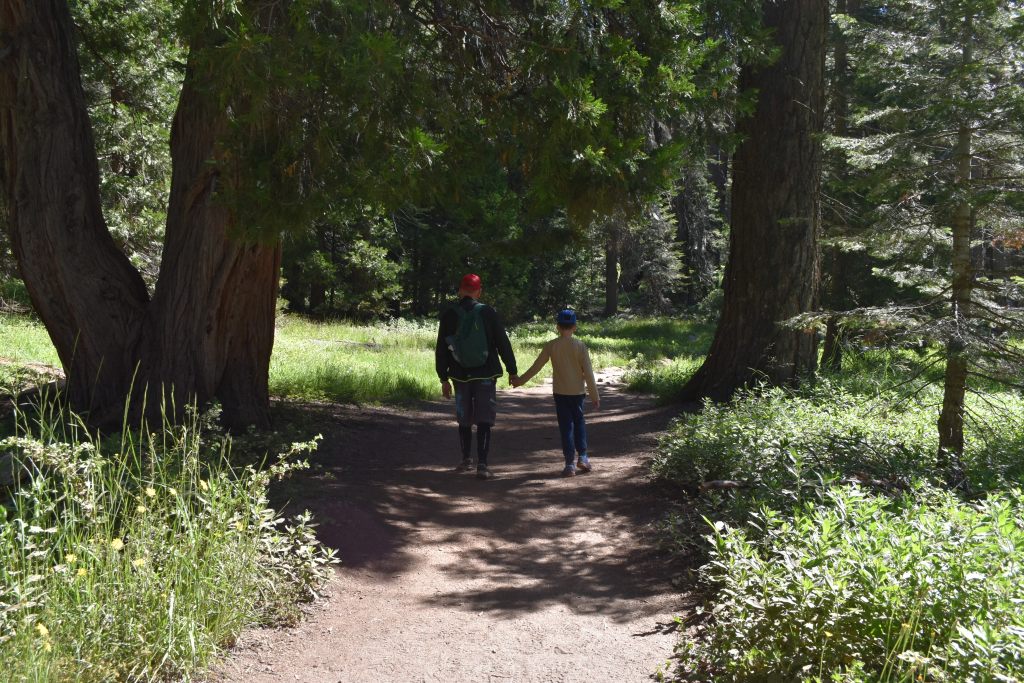
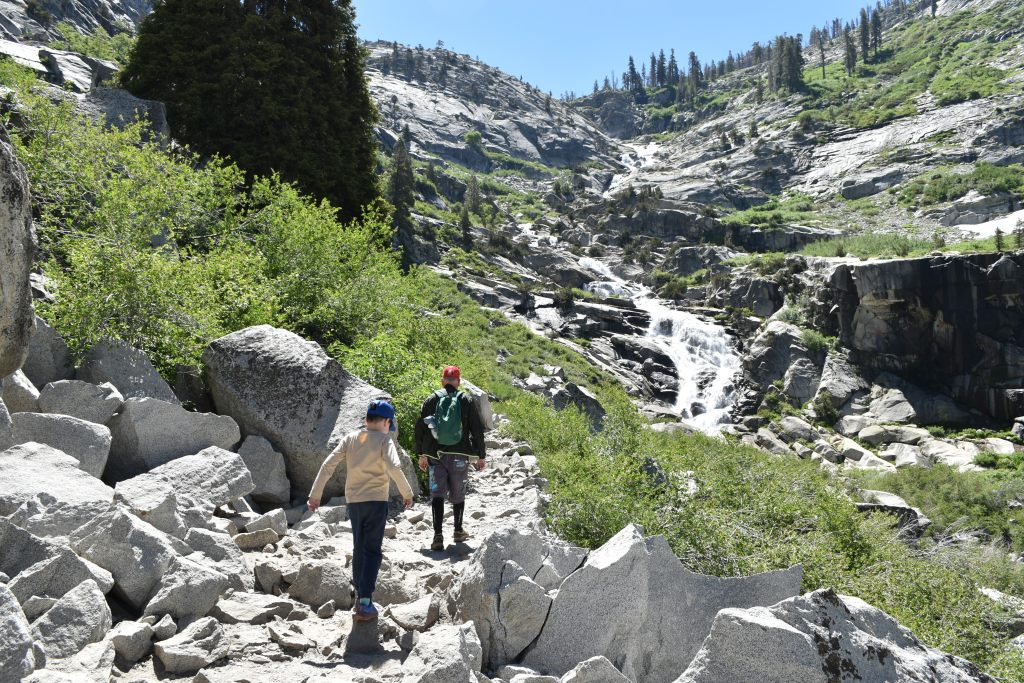
The trail snails along the Marble Fork of the Kaweah River – absolutely stunning – and then through the forest with impressive granite cliffs ensuring the dramatic backdrop.


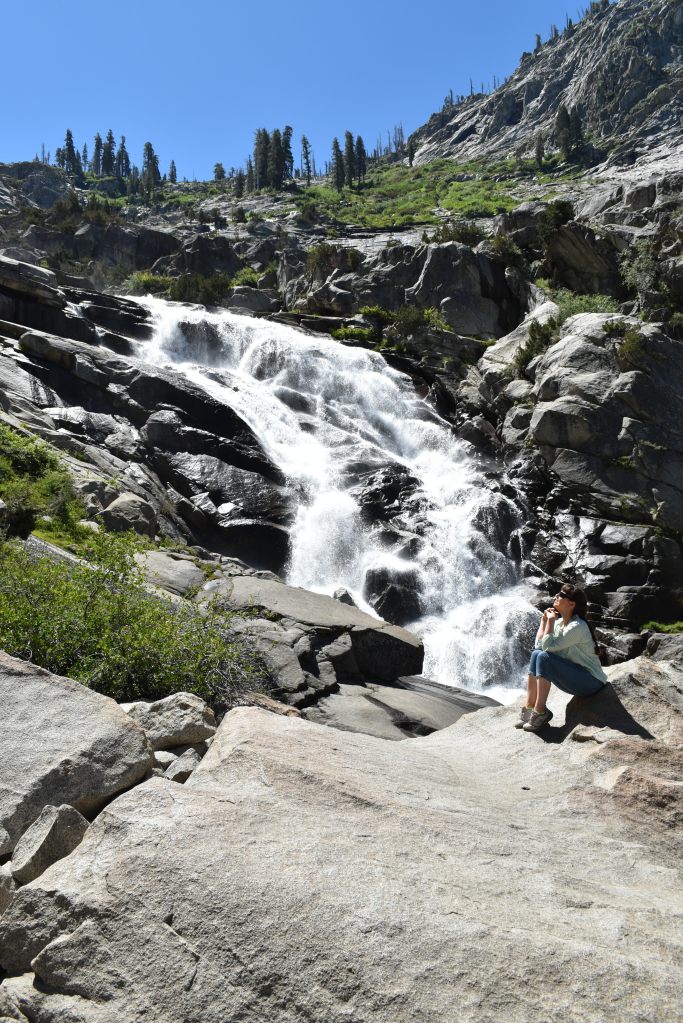
Tokopah Falls is 1,200 feet / 365.8 meters high. Travel guides warn about being careful on the rocks around it. Still, we saw people going down the rocks to reach the water.
Visiting Sequoia National Park was a mind-blowing – pardon my choice of words – experience. Almost a year after returning home, we still talk about it, and the impressions haven’t dimmed a bit. I would love to go there again someday.



After the sequoias, which more than lived up to our expectations, we set out to the coast. Finally, we were to meet the ocean and see the iconic coast of California.
If you haven’t read it, click to read the blog post dedicated to the first part of our American trip. Grand Canyon, Hoover Dam, Page, Horseshoe Bend, Antelope Canyon, Williams, Kingman, Flagstaff, Bearizona
I post about our American journey on Instagram. If you want to read my posts about our adventures on the coast of California before I make a big post here on my blog, you can follow me there. Eve Koguce Books on Instagram
 Eve's Book Diary
Leave a comment